Tui on kowhai

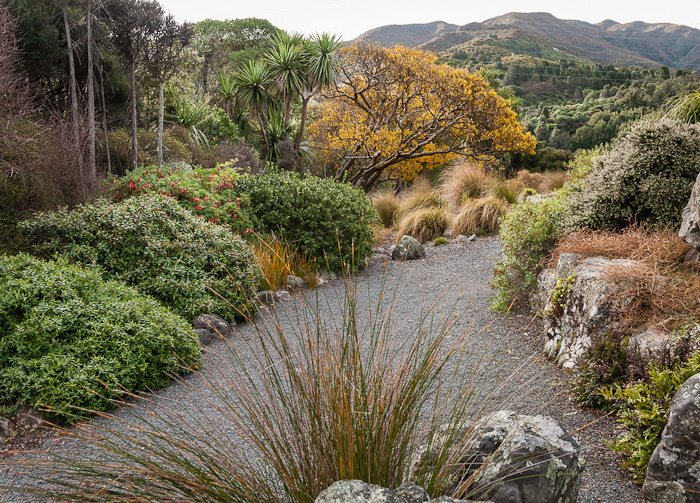
Late afternoon at Otari Native Botanic Garden in spring - pretty colourful given that the colours of NZ native plants are generally quite muted.  The textures and shapes of the grasses, shrubs and trees add interest too, here in a small corner looking beyond to Wilton's Bush and regenerating growth on the hills.
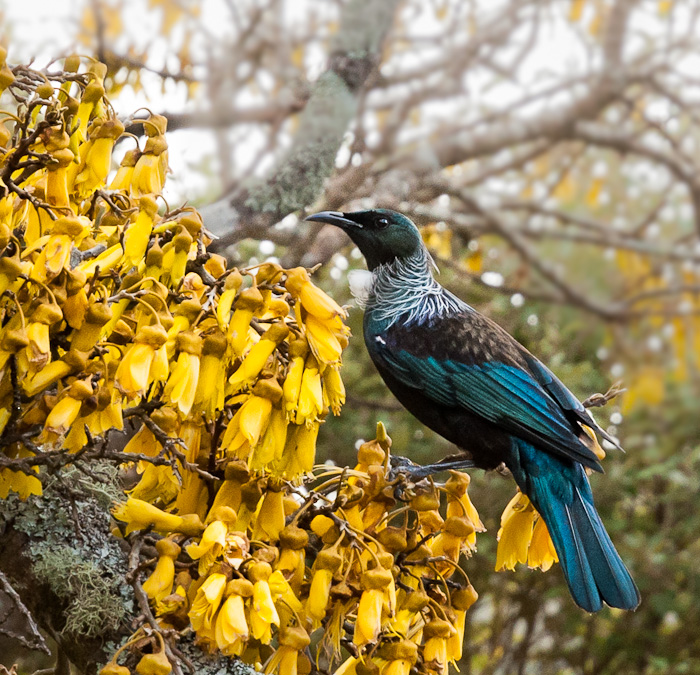
The golden kowhai flowers are profuse, and they attract a lot of agile and noisy tui hungry for the nectar.  Images of tui on kowhai in bloom are a bit of a cliche, but still an engaging sight.  This one was very active, but in a moment between drinks was still enough to display its bright eyes, white collar feathers and neck tuft, and the lovely blue green iridescent sheen of the otherwise black-looking feathers.
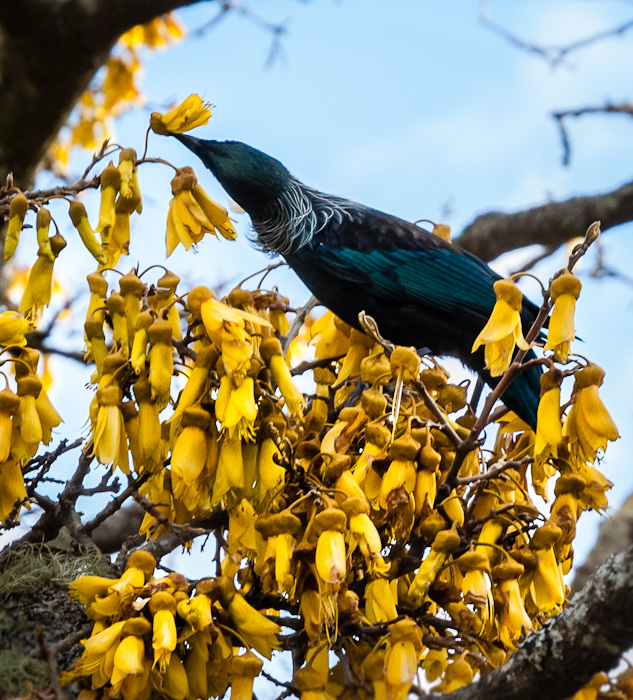
Then it was back to work, stretching its neck up to sip the nectar from the base of a kowhai flower...
What's this then?  Was it the click of the shutter, or other tui approaching - the tui was on alert again.

Seen from below the white neck tuft and collar feathers do suggest a clerical collar - early European settlers called it the Parson Bird.  But I think tui lack the seriousness which that name suggests - for me they are great entertainers even though they are just going about their lives. 

Eyes to the skies (still!) - spring weather watch

Spring is delivering its very changeable weather and the fierce equinoxial winds which are particularly tough on soft new plant growth.  People feel battered by the wind too, but at least we have a pleasurable way of trying to read the weather.  Looking to the sky we can see the drama of the ever-shifting clouds.

A long white lenticular cloud glowing over Wellington harbour tells us that there are fast winds in action.

And a golden halo hovers above a hill by Owhiro Bay on Wellington's south coast - a pink sunset and a promise of a fine day to come.  No matter how frustrating I find the weather at this time of year, I am energised quite simply by looking up to the spectacle of the sky.

After the storm - a different drama

The storm is over - the winds have settled and the sea is calm.  Last night, high cloud had not yet cleared.  And another drama unfolded.

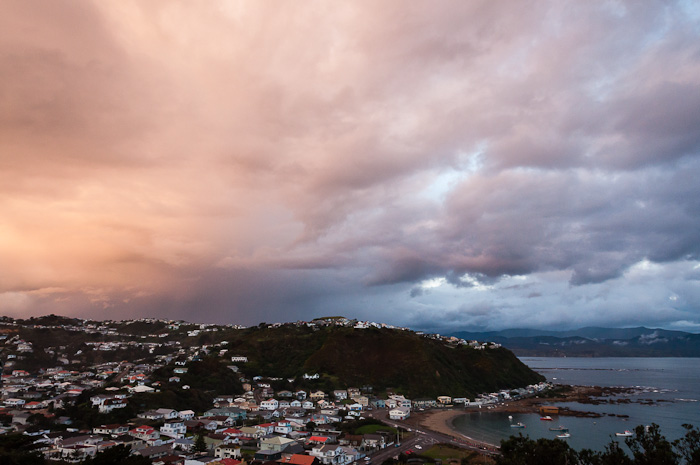
Golden light as the sun sets behind the hills of the south coast, seen from Princess Bay and looking towards Island Bay in the distance.  Sunbeams like this are called crepuscular rays because they are typically seen at dawn or dusk (crepusculum is Latin for twilight) when the contrast between dark and light is most obvious.  I knew, when I saw the blanket of high cloud, that there would be more colour in the sky as the sun set further.  And there was...

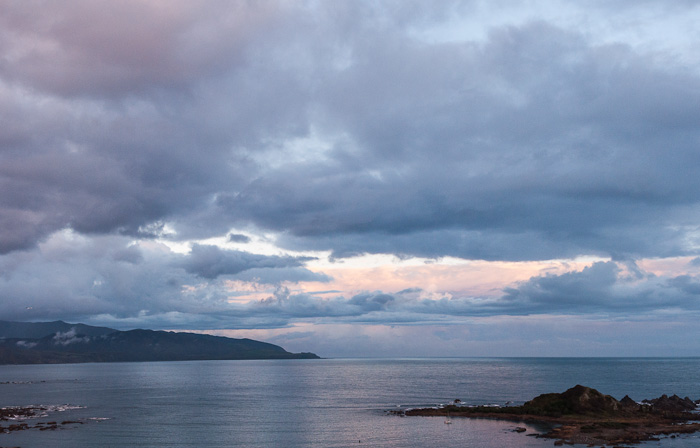
A wider view, looking towards the South Island.  The silhouette of Taputeranga is in the middle distance, the South Island glimpsed in the distant haze.  A much more delightful drama than the storms.

Pink before the storm

Yesterday morning's soft spring sunrise - so pretty.  But close behind, a southerly storm...

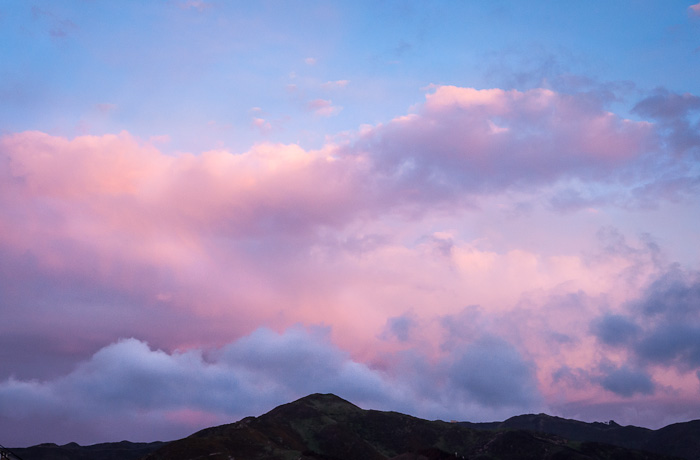
Pastel colours over the hills behind Owhiro Bay on Wellington's south coast.  Down on the coast, the silhouetted South Island could be seen framed by the darker clouds and tints of the storm front, which brought gales and heavy rain a few hours later.  Pink morning skies often seem to fit the "red sky in the morning shepherds' warning" weather prediction.  Spring, changeable weather, dynamic skies - there is a lot of energy around!   

In the pink - despite the weather

Wind and rain do not deter the spring flowers - here the slightly crumpled soft pink blossom of the dwarf almond tree "Garden Prince" - a very early spring delight.

And here the much thicker petalled magnolia flowers, still elegant and sumptuous despite the elements.

Bruised petals squashed against a branch, a petal lost - but the weather damage allows us to glimpse inside the flower to see the jewel-like conical receptacle.  And the sky is blue again.