Morning mist and bright reflections and thinking about what's important.

This year I have been slow to post - frankly dispirited by the size of the suffering that we humans keep creating for ourselves and for the planet.  I've been thinking - what can I do, what shall I focus on?  But while I was on holiday further north in the North Island, nature provided me with some encouragement.  At Kaihu, near Dargaville on the Kauri Coast, sunrise briefly coloured the morning mist a soft pink, and burnished the bush with golden light.  A strangely coloured but to me gorgeous scene, uplifting, delightful - I've never seen it quite like that before.

At the end of another day, at Lake Taupo, more lightworks.

This is a very big lake.  It partially fills a caldera (collapse crater) of Taupo Volcano, a "supervolcano."  Fortunately the eruptions are not frequent.  The caldera's current size is a result of the Oruanui Eruption, which devastated much of the North Island about 27,000 years ago.  There were many smaller eruptions between that and the Taupo Eruption 1800 years ago, the most violent eruption known to have occurred in the world over the last 5000 years.  The ash plume reached the stratosphere and covered New Zealand in least 1cm of ash, and it is possible that this ash was the cause of red sunsets recorded by the Romans and Chinese at that time.

The surrounding Taupo Volcanic Zone is still active, and the Taupo Volcano is regarded as dormant. 

Hmmm.  I think there is a lesson here about our size in the scheme of things. 

But being tiny is not a reason to feel powerless - the Dalai Lama quote comes to mind - "if you think you are too small to make a difference, try sleeping with a mosquito."

Bee watching on a sunny summer evening

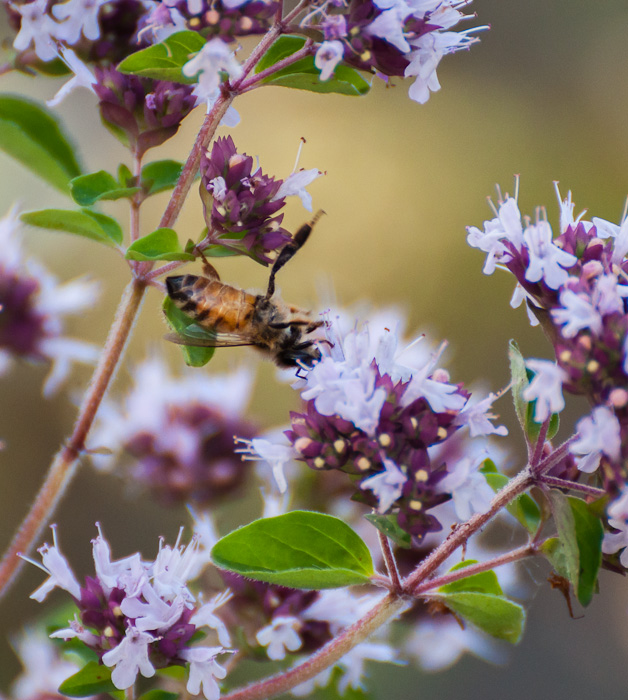
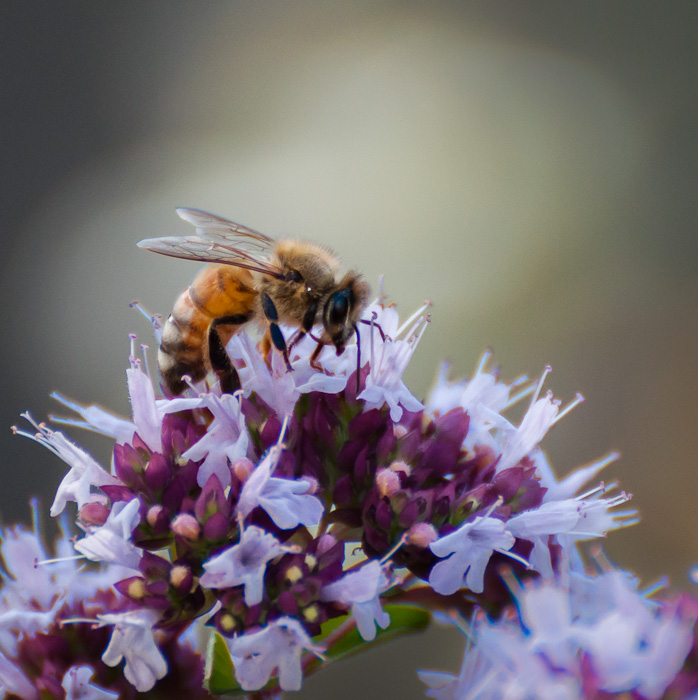
One of those special times - a balmy summer evening when the sunlight is bright and low in the sky and thus providing light at an interesting angle.  It was illuminating a profusion of oregano flowers growing by the verandah, making a bright halo around them. 

The vision was not just attractive to me.  Several honeybees were busily feeding. One of the bees caught my eye.  It seemed rather tiny and very determined. 

The backlighting made its abdomen appear to glow.

It fed, buzzed, landed, fed - appearing very focused...the epitome of the busy bee, reaching ever more of the flowers.

Oops, acrobatics were required when one of its feet appeared to get hooked in the plant.

But it was only seconds before its balance and feeding resumed.

I was happy drinking in the pleasure of watching this little bee, and it was in turn drinking what I hope was good nourishing nectar.  Bees are so precious now - we keep identifying more hazards, arising from our impact on the environment, the way bees are used and exposed to pests, the use of poisons on the plants they visit.  At least I do know that the herb plant had not been sprayed and there were no neonicotinoids used in that area. 

This is a plea to all who read this - do take care of the environment so that bees can recover and flourish.

A vibrant sight - pohutukawa in flower

The end of the year is nigh.  Christmas has been celebrated and the pohutukawa - Metrosideros excelsa, the "New Zealand Christmas tree" - have been blessing us with their beautiful rich reds, ranging from crimson to scarlet.  This one is at Greta Point, but it seems that everywhere you look here in Wellington they are adding their vibrance to the bright summery weather.

Although they did not naturally grow in Wellington they have been used a great deal in amenity plantings in the city and in the suburbs.  They thrive almost too well here (as they do to the point of being weeds in places like Spain and California) and there is a cooling down on their use.  Instead we are encouraged to plant a relative that grew here naturally - northern rātā, Metrosideros robusta. 

But when the pohutukawa are in full flower the rich redness is appreciated and welcomed, not least because it is associated with a festive time.  Judging by the number of cameras and smartphones that I see being used, I am not alone in my delight.  And although picturing the pohutukawa flowers is a seasonal cliche, I am happy to celebrate them and with them the pleasures that summer and the end of year can bring.

High cloud at sunset and a light and colour show

Yesterday Wellington had a lovely summer's day that was actually warm (24 degrees!) and sunny with clear blue skies and almost no wind.  As the day ended, halo phenomena became evident in the high cloud that had developed.  I could see what looked like one side of a halo, with the rest hidden by the headland at the southern end of Island Bay.  I think the bright spot (which is in line with the position of the sun) was a parhelion or sundog.  Here the arc of light is seen reflected in the calm water of Island Bay.  Some divers in the water, the rocky shore, and the island Taputeranga are all in silhouette as is the misty outline of distant mountains in the South Island.  The arc of light appeared brighter than in the photo, and you can just see the characteristic reddish tinge on the inside. 

The sun was low in the sky.  It was too bright for me to try and photograph its position in relation to the arc of light.  As the sun continued to set the halo was less evident and the colours of sunset started to take centre stage. 

First a soft golden light contrasted with the rocky shore, coast road, and South Island in the distance.

Then the colours warmed up - pinks, apricots and gold, and the sky darkened - seen from a vantage point further from the beach.

But it didn't stop.  A feature of high cloud is the way it captures colour after the sun has gone down - and sure enough, the wait was worthwhile.  A fiery red was the finale.

Now I am accustomed to the idea that a red sky at night, "shepherd's delight", signifies good weather the next day.  So I was surprised to read that high cloud like this, which colours red at sunset, can be a sign that the weather is going to deteriorate, that there may be an approaching front of a depression bringing rain in the next day.

Sure enough, mist and rain today.  Oh well, it was lovely while it lasted!

Photographic play & the beauty of waiuatua, Euphorbia glauca

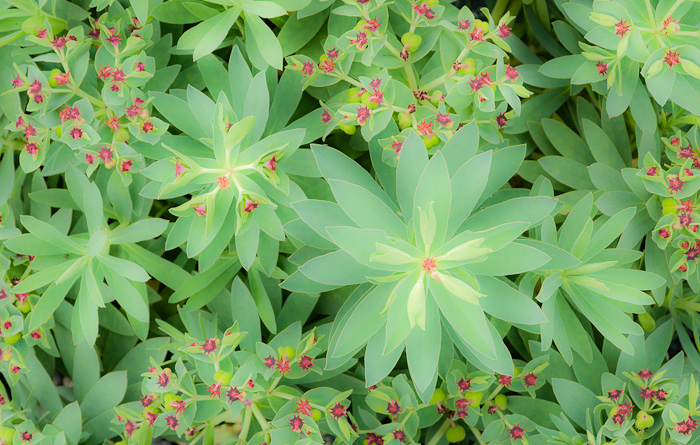
I love the colours of waiuatua - Euphorbia glauca, New Zealand sea spurge.  It is often included in amenity plantings along Wellington's south coast, so even though it is endangered ("in decline") in nature, we can readily enjoy its beauty - this photo was taken by the car parking area at Princess Bay.

Looking down on the blue green leaves and the red/purple flower structures - they contrast strongly, but the overall effect is quite gentle.  I have further softened this with the magic of digital postprocessing in Lightroom by reducing mid-tone contrast using the "clarity" slider. 

A huge number of photos are taken and shared these days - capable cameras are readily at hand, able to do all kinds of things for us.  Even though maybe quite a proportion of the photos taken are quick snapshots, and are processed using presets, I nevertheless appreciate the way that photography involves some degree of attention, awareness, experimentation and discovery.  I find that taking and processing images can be meditative and it can be playful.  All of it deepens my appreciation of the complexity and interest in aspects of the natural world which can otherwise be so easily overlooked.  And it strikes me that if we slow down, take time, and really savour the process, photography can be a delightful kind of awareness practice.

Lilies everywhere - New Zealand style

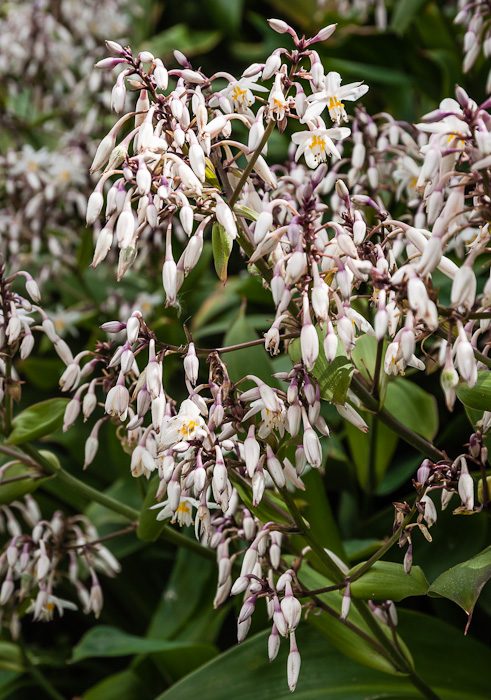
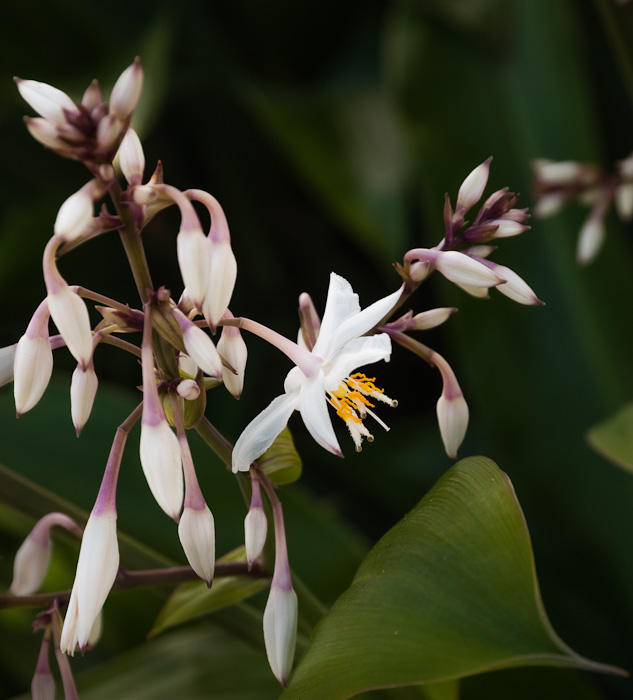
At this time of year - late spring/early summer - rengarenga or rock lilies (Arthropodium cirratum) seem to be everywhere - masses of little white flowers announce their presence, lighting up the often difficult places where they tend to be planted - they cope with a wide range of conditions.  The clumps of long mid-green leaves can look handsome in their own right, if they haven't been feasted upon by slugs and snails.  But the sheer profusion of flowers is something else.

Close-up you can see that they are not just white - the stamens are white and purple, and have yellow bristly brush-like anther tails, and the buds have a purplish flush.

It is endemic to New Zealand.  The significance of rengarenga to Maori as outlined in this RNZIH paper has been considerable, a food source also used for medicinal, spiritual and other cultural purposes. 

From a wee lily to a tree lily...the flowers are again small but large in number. 

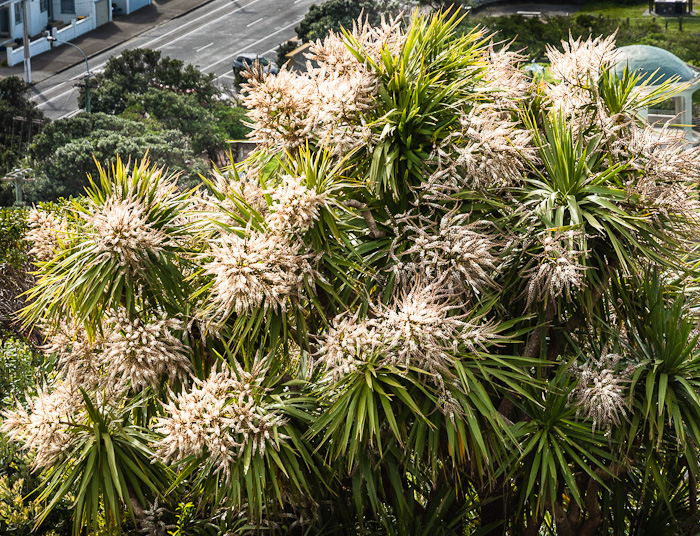
Ti kouka, ti, or cabbage tree (Cordyline australis) is another endemic New Zealand plant.  The distinctive spiky tree shape is seen on farm paddocks, on the margins of bush and in gardens through the country, although it has been decimated in some areas, especially Northland, because of a disease appropriately named Sudden Decline.  Fortunately there seems to be a lessening in its severity in recent years.

Looking down on a mature tree in flower...

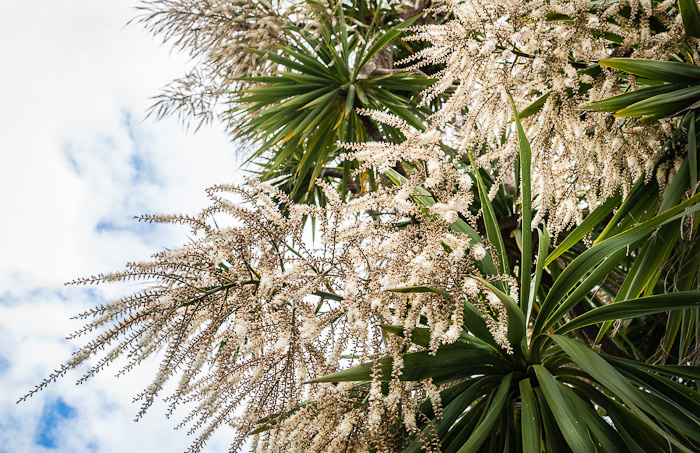
And looking up...

The flowers are sweetly scented and followed by numerous berries.  The native pigeon, an impressive large bird, loves to feed on them. 

One of the largest tree lilies in the world, it is also very resilient.  Ti does well as a coloniser on bare ground and is often used in restoration plantings.  It has a deep taproot that holds fast to the ground, fire resistant bark, and is easily propagated from seeds or cuttings, even bark cuttings.  Ti has also flourished in gardens in the Northern Hemisphere and has acquired the name "Torquay Palm" in its travels - Torquay in the south of England is a long way from home! 

But despite attempts to appropriate it, we tend to regard it as an iconic tree, a symbol of New Zealand. 

A world of roses in my backyard - China, Charleston, Paris, Reunion, Ispahan

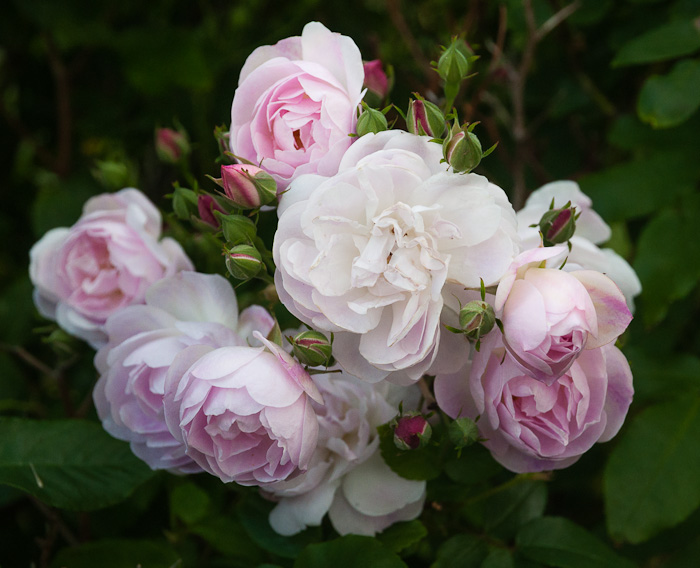
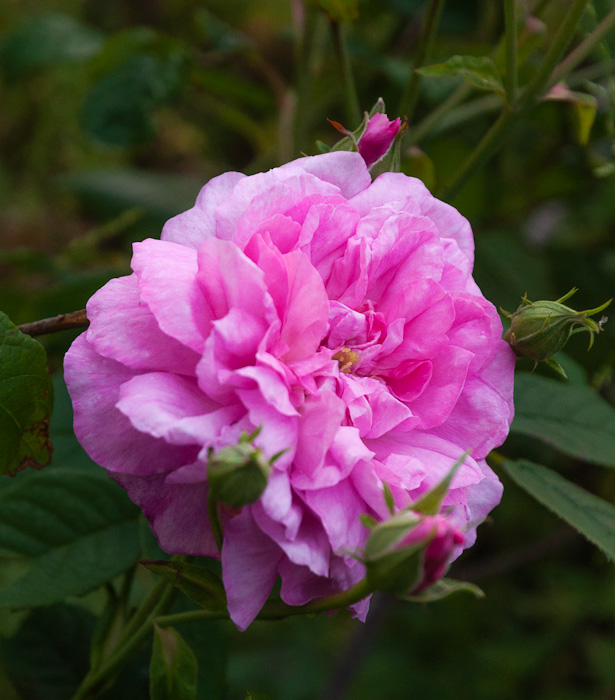
Well, the wind has been roaring, but that has not defeated roses in my back yard.  To live here they have to be tough, and in this difficult spot I have a number of old-fashioned roses - chosen because of their more informal beauty, their perfume, and their robust constitutions.  They require (and get) little attention apart from admiration.  They have also travelled a very long way to end up on this windy Wellington hillside, and thinking of their distant origins is one of the delights I enjoy with these plants.

We start in Charleston, South Carolina, where a rice planter named John Champney was given a China rose, Old Blush, by his neighbour Philippe Noisette.  Champney crossed the repeat flowering China rose with the autumn-flowering musk rose Rosa moschata, producing Champney's Pink Cluster, regarded as the first of the Noisette roses.  It was repeat flowering - a quality that breeders sought, vigorous and scented, and a very good parent rose for breeding.  In turn, Philippe sent some seedlings from this rose to his brother Louis in Paris, and he introduced this one, Blush Noisette, in 1817.  (This is the usual account, but in his book Classic Roses Peter Beales has as a footnote an account, written in 1846, of a breeder in Long Island being the source of the Noisette, and sending seedlings to a French nurseryman in Rouen where they were sold before Noisette's rose turned up.  It was suggested that Philippe Noisette may have acquired his seedlings from Long Island somehow.  Who knows?) The lovely clusters of little blush pink scented blooms begin to open in early spring and continue till late autumn.  It is a healthy tall shrub that can be trained to climb if you want it to.

From the Middle East came the Damask roses, natural crosses between the species roses Rosa moschata, Rosa gallica and others.  They were brought back to Europe by Crusaders of the 12th and 13th centuries. This group of roses has strongly perfumed petals and varied growth and flowering patterns.  Ispahan is a summer flowering Damask, producing generous displays of warm pink flowers over a period of 6-8 weeks.  Ispahan is named after the Iranian city (Isfahan) famed for its beautiful gardens.  Rose history is always somewhat contentious it seems, but it appears that this rose was bred in Persia, now Iran, in the early 1800's.  There are descriptions of roses like it growing in large numbers on hillsides between Isfahan and Shiraz.  What a glorious sight that must be!  Ispahan makes a large cheerful bush, the roses strongly scented and lasting well.

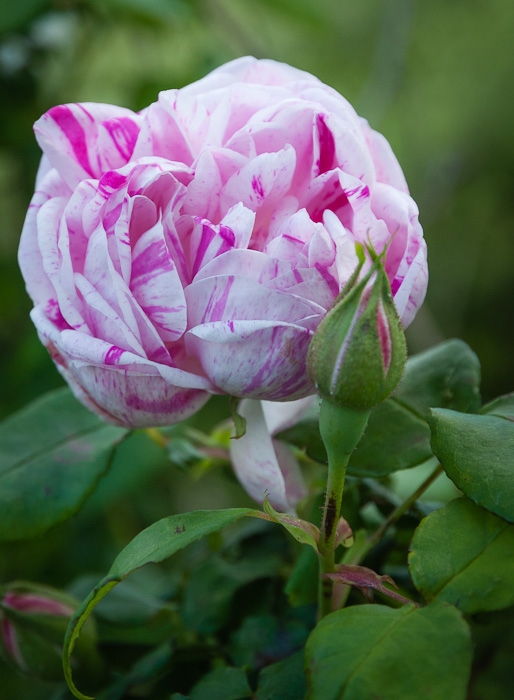
And from the island of Reunion (once called Ile de Bourbon) in the Indian Ocean near Madagascar, came the Bourbon roses.  They are thought to have arisen from a cross between the Autumn Damask and the China rose Old Blush.  The director of the island's botanical gardens sent seeds to his friends in France including M. Jacques, head gardener to the Duc d'Orleans, who recognised the new strain of roses and named them Bourbon roses.  They are repeat flowering vigorous shrubs, and many crosses were made in French nurseries yielding beautiful varieties very popular in gardens at that time.

Rose Honorine de Brabant belongs to this lovely family. It has wonderfully eccentric stripes, splashes and speckles of crimson or purple on pale lilac pink. It makes a healthy strong growing shrub that can be trained as a climber.

(It appears that the first Bourbon rose might have been introduced to India, as it was described growing in the Botanical Garden in Calcutta, now Kolkata, before seed was sent to France. Rose history demonstrates again how it is rather full of intrigue and mystery!)

Dynamic weather - cloud appreciation time

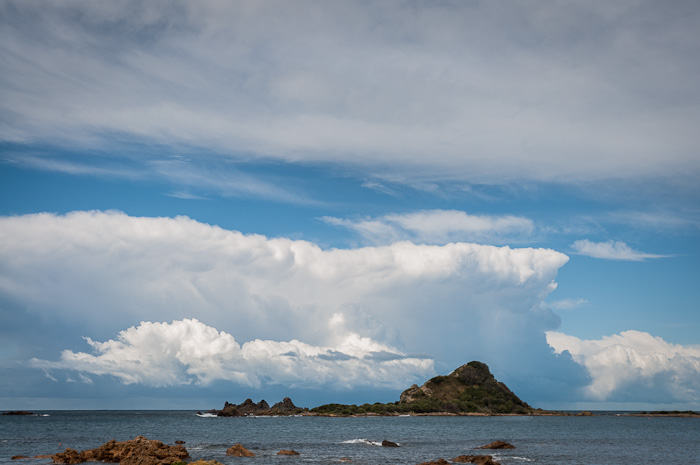
Over the whole country we have been having capricious spring weather, with hail storms and strong winds causing some havoc.  For Island Bay it has been pretty much things as usual - in other words, dynamic!  The weather forecast yesterday suggested we would be hit by showers and hail, but the morning was bright and sunny.  A bank of clouds seemed to be rolling in from the south, and behind Taputeranga was a line of cumulus clouds, with a towering cumulonimbus providing some drama.

Not only do they look dramatic, cumulonimbus clouds are associated with dramatic weather - thunderstorms, lightning, severe wind gusts, hail.  But although there was some rain in the distance, conditions were bright and sunny - not the stormy weather that was anticipated.  It was only very late in the day when the clouds became menacing.

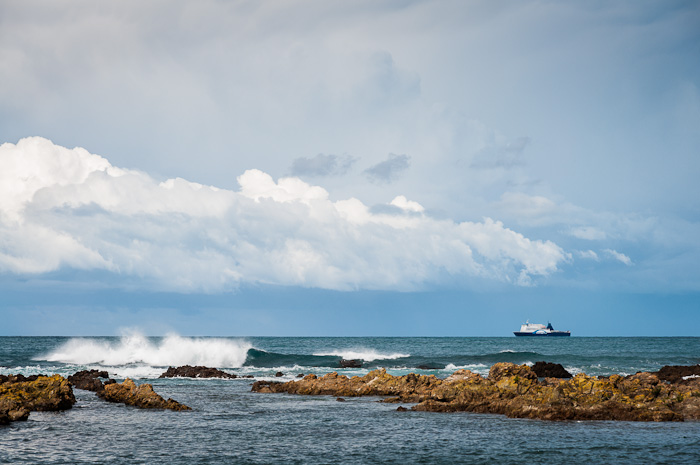
In the area of bright cloud over the Orongorongos there were flashes of lightning.  I don't know what their correct designation would be, but the heavy storm clouds seemed to fill the sky, and dwarfed the very large cruise liner heading out past Baring Head.  In the mist of the rain you could hardly see the Interislander ferry or the plane up in the clouds. 

Now, that's the weather we expected!

Colourful spring foliage in Auckland's Eden Garden

Here in Wellington our trees are shaped and pruned and often stunted by wind.  In Auckland trees have a much easier time.  With less wind they tend to grow very quickly to a good size.  On a brief visit to Auckland this weekend I was delighted by the trees in their fresh spring growth.  A particularly good place to see beautiful trees that don't do well on Wellington's south coast is the lovely Eden Garden.  It was created by volunteers who started planting over forty years ago in an abandoned quarry by Mt Eden, a volcanic cone.  The site is steep and rocky but (I presume) blessed with good volcanic soil. 

Eden Garden is a memorial garden, and when I visit I go to see my father's tree.  His tree is in a glade - difficult to photograph but a special setting. 

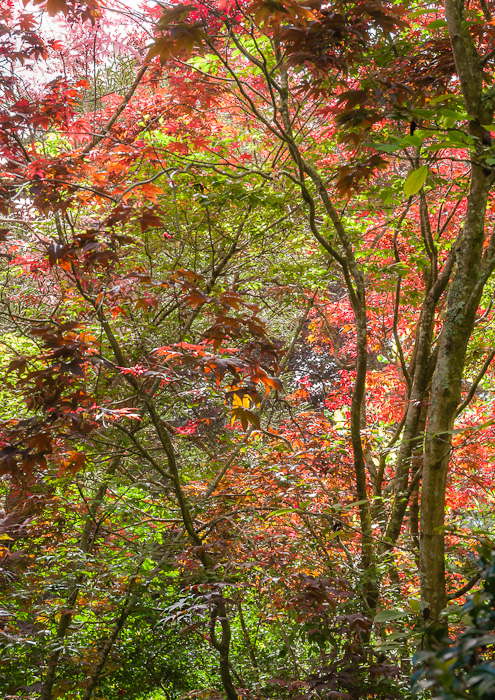
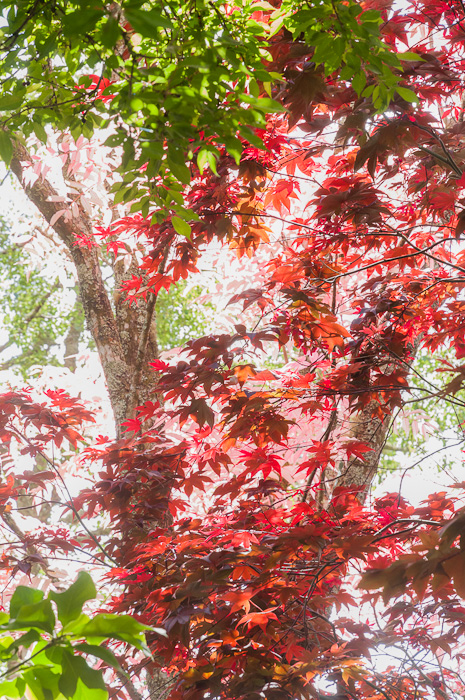
The leaves of Japanese maple, backlit by bright sunlight, are glorious in crimson and green.  The pink colour is due to the leaves of the Toon tree - Toona sinensis.  They are this improbable pale shade when they first emerge in spring.  Greens of camellias, magnolias and rhododendrons - especially vireyas - provide a rich contrast, as do some lovely mature native trees.  Japanese maples are a particular treat for me to see.  Their foliage is wind sensitive and just when it emerges and is at its most tender, the equinoxial gales are whipping around our place in Island Bay.  But not here in Eden garden, enclosed and sheltered by the old quarry.

The sight of these colours was irresistable to my trigger happy shutter finger - digital photography allows you to take too many photos. 

Here, even brighter backlit leaves glow like the colourful glass of stained glass windows.

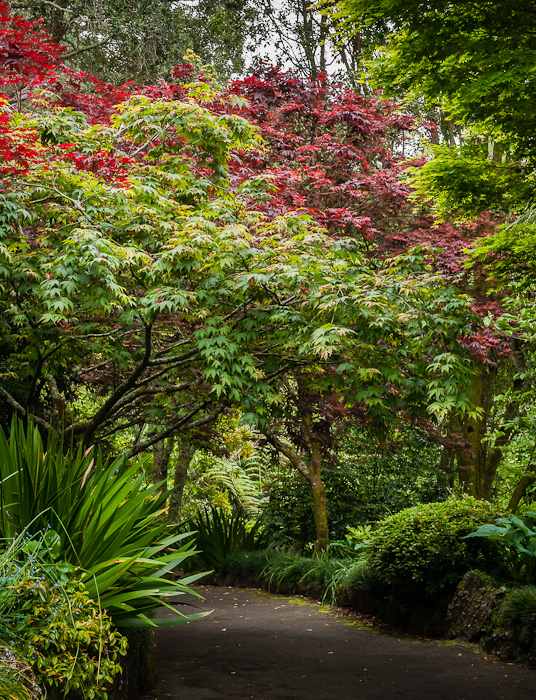
And where the light is softer on the steep path down to Duncan Dale, the reds and greens of the Japanese maples quietly intensify each other. 

Bliss!

Long after the fire, Happy Valley hillsides turn from grey to pink

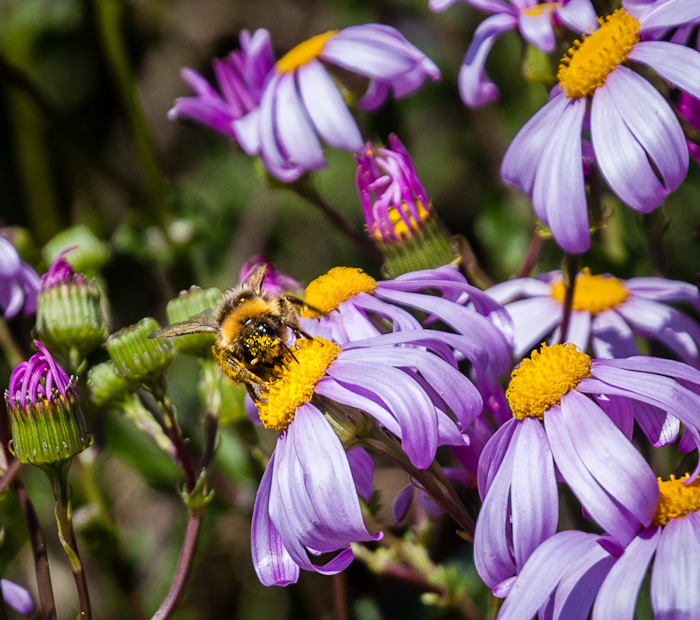
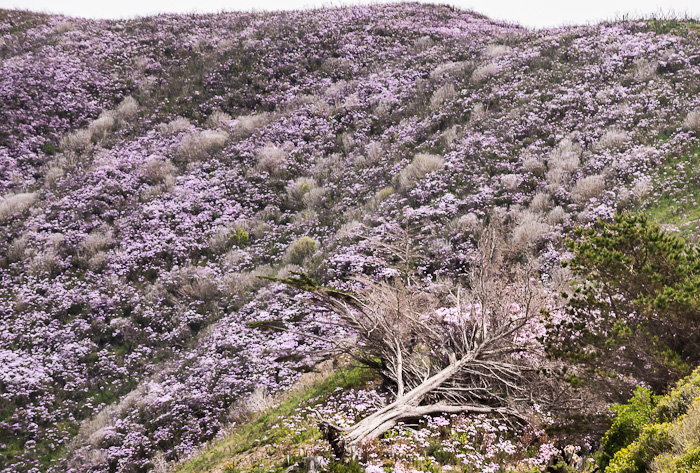
The Cape Province is only a small area of South Africa but it has a wonderful range of endemic plants (plants found only there.)  Many have been introduced and flourished elsewhere, one perhaps too well - Senecio glastifolius or pink ragwort, a pretty perennial daisy bush which appears on Wellington hillsides each spring in ribbons of purplish pink.  It is bright and cheerful and the bees love it.

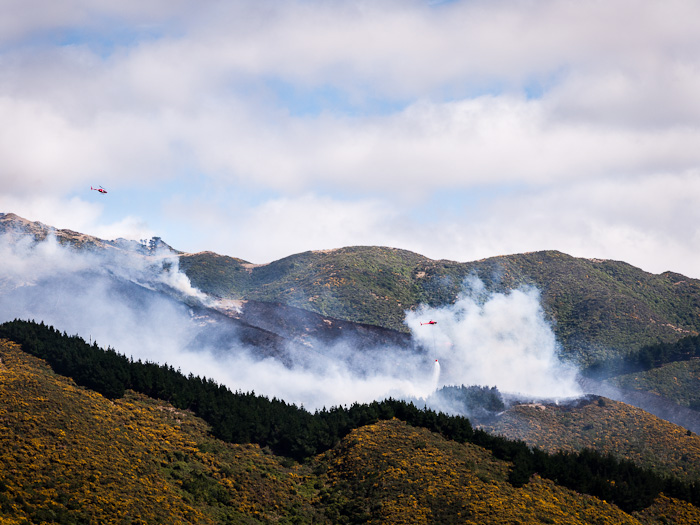
It took me a while to notice that it might appear profusely in one place for a year or two but then the show of pink would dwindle, only to spring up somewhere else.  And that somewhere else would be another area of disturbed ground - a building site, a pathway, a place where trees had been cleared, and in this case a place where the shrubby cover had been burned in a scrub fire back in February 2013.

In the first spring after the fire I was expecting to see pink.  No - just some green grass covering the soil.  But now in October 2014, the second spring after the fire, there is a flourishing of pink particularly where the fire did the most damage. 

A reminder of the fire near Owhiro Bay, on the Happy Valley hills.

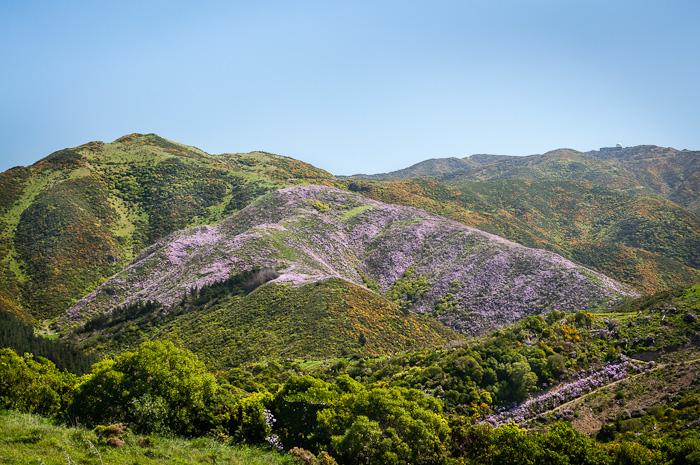
And now, looking at the affected area but from further away (Tawatawa Ridge, on the city to sea walkway with a view across to the Happy Valley hills towards Te Kopahou) - a colourful if weedy view - pink ragwort and golden gorse, contrasting with the rich greens of native shrubs. 

Both these weeds seem to be more problematic in other areas of New Zealand, but appear to be less overwhelming in windy Wellington where they provide shelter for native plants which then gradually take over.  I know that is the case for prickly nitrogen fixing gorse - a formidable protective "nursery plant."  And it appears that pink ragwort does not completely dominate for long.  But even at home in South Africa it is said to be something of a pest because of the way it can take hold in disturbed ground.  Being a successful plant unfortunately often also means being designated a "weed" - whether you have been introduced from afar or not. 

If a weed is disrupting an ecosystem or displacing the plants that originated in a particular place, it seems reasonable to want to conserve and nurture the plants and ecosystems that are threatened.  It is not always easy!  But along the Tawatawa Ridge walk, you can see New Zealand shrubs and ferns growing amidst the thorny gorse and the purplish pink daisies of Senecio glastifolius.