Hot air or the winds of change - is there the will to limit climate damage?

Wellington is a very windy place - often described as the windiest city in the world because we "enjoy" the highest average wind speed through the year.  Other places get more extreme winds at times, or are windy more of the time but we trump them with an average wind speed of 16 knots (29.6 km/hr or 18.4 miles/hr), and an average of 173 days in the year above 32 knots (59.3 km or 36.8 miles/hr), and 22 days over 40 knots (74.1 km or 46 miles/hr).  We have been having a lot of gales in the last few months.

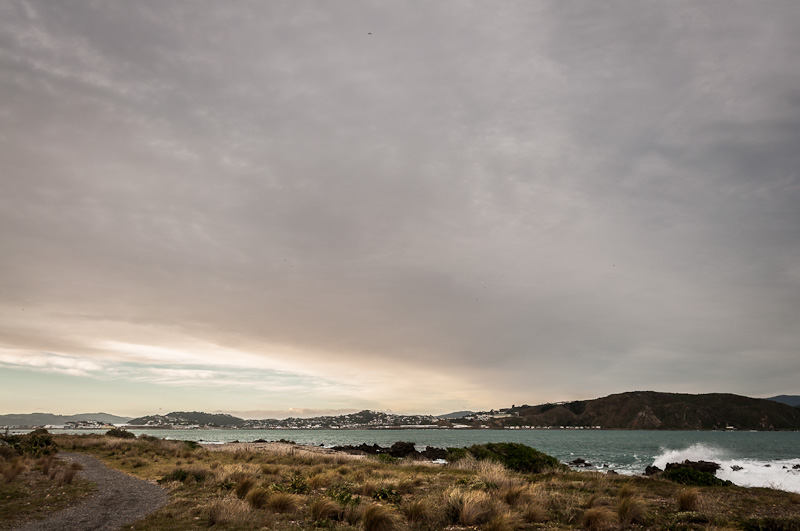
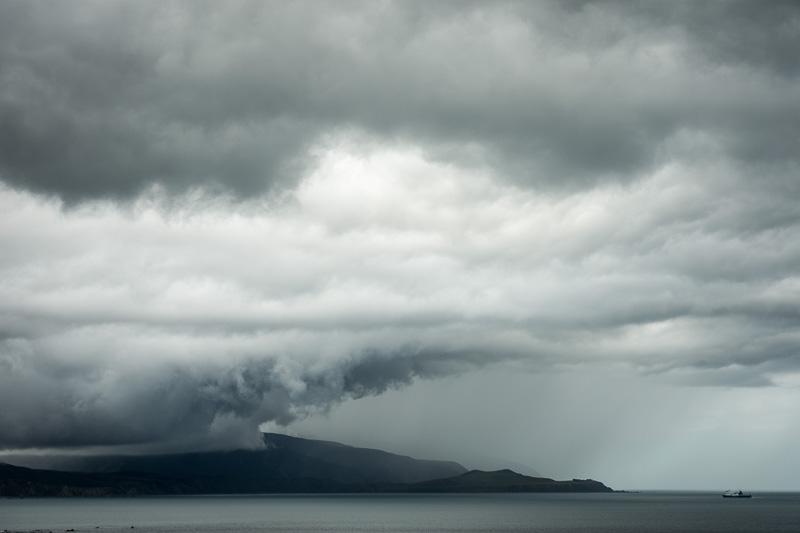
At least the wind means that the clouds are interesting (albeit sometimes disturbing) - like these rainclouds over Baring Head, dwarfing the ferry coming in to Wellington Harbour,
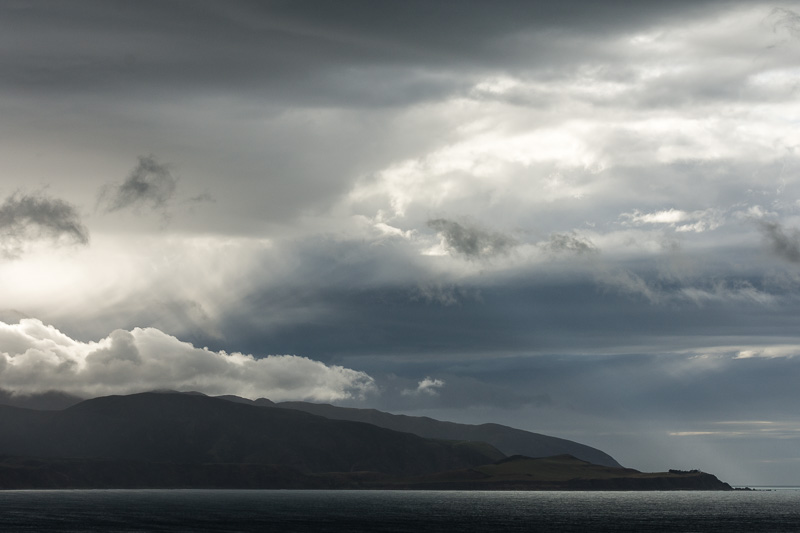
or these ones creating patterns of light before dumping the rain.
Maybe the wind does create interest, and the illusion that we are polluting the air less than we are (it all gets blown away!) but it can also be very damaging, tiring and frustrating.  Grrr.  So the thought of more extreme weather is not welcome.  But that is what we face.

The 2015 Paris Climate Conference is under way.  The goal is a legally binding and universal agreement on climate, with the aim of keeping global warming below 2°C.  Way back in 1992, at the Rio Earth Summit, the UN Framework on Climate Change was adopted - a framework for action to stabilise atmospheric concentrations of greenhouse gases and to avoid “dangerous anthropogenic interference with the climate system.”   We have not done well.  New Zealand has done particularly badly.  Our overall contribution of greenhouse gases is relatively small because of our small size.  Our politicians hide behind this and they are full of excuses - an attitude exemplified by our Prime Minister John Key that many of us find shameful.

The damage that we humans have already done means that we face increasingly extreme weather.  The way that our politicians are dealing with this (denial, pretending to be doing something, exhorting others to act while failing to do so) gives me even more concern.  Just how bad do things have to get before they walk the walk as well as talk the talk (so often a lot of hot air)?
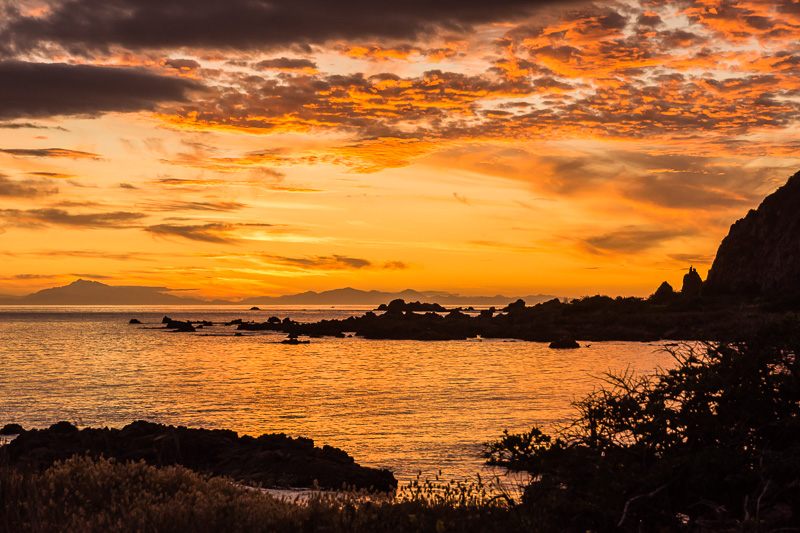
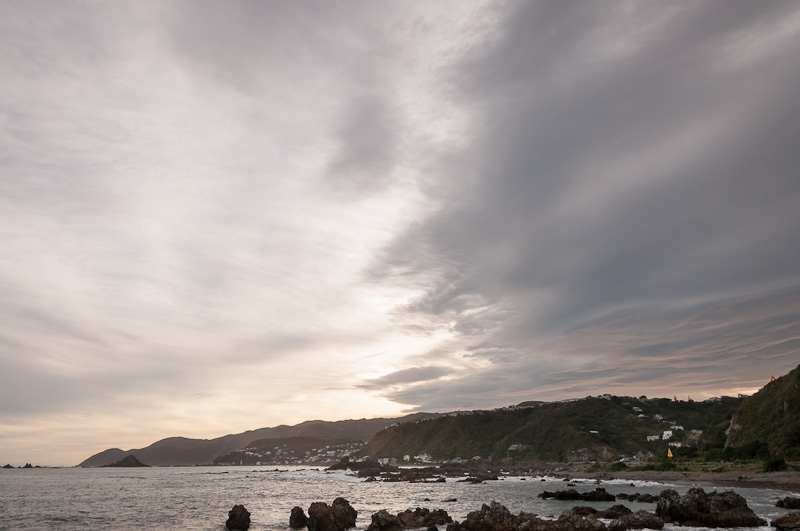
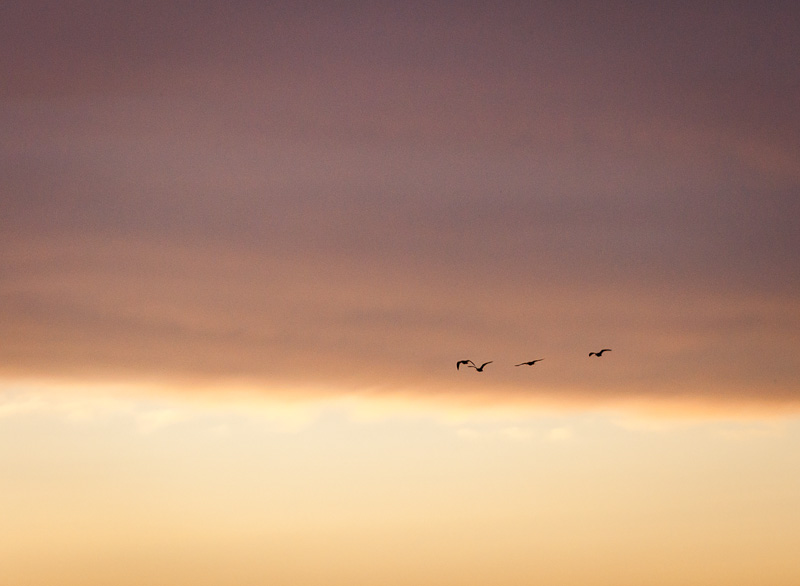
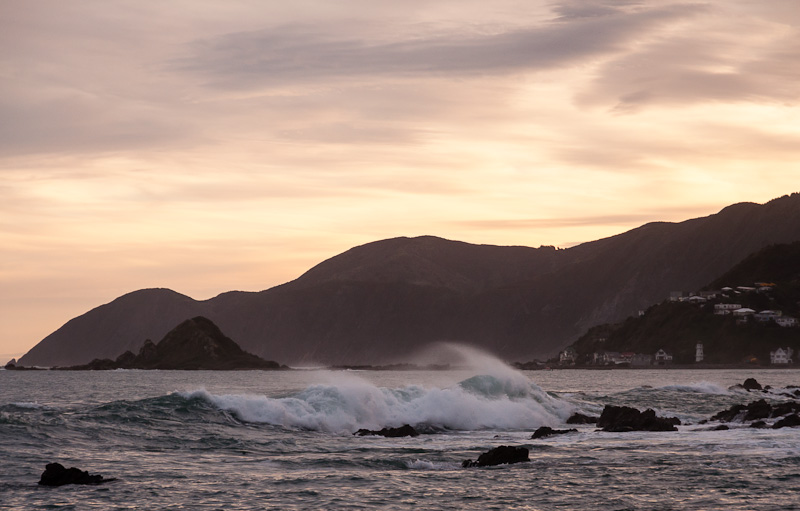
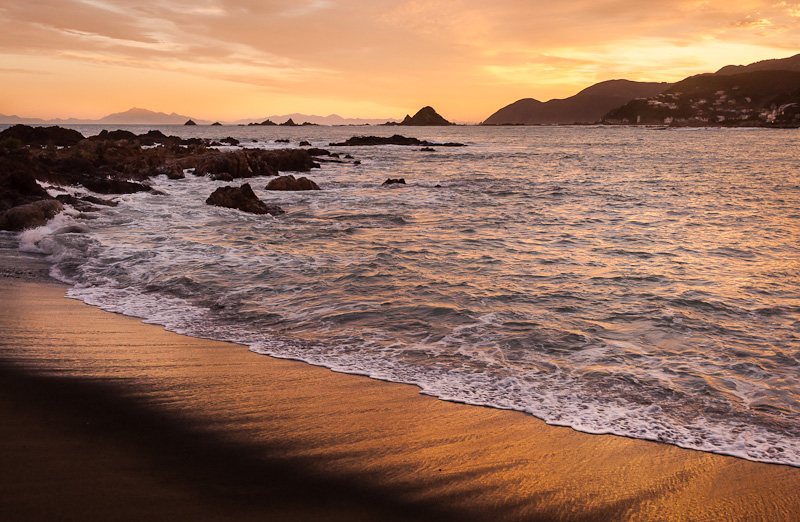
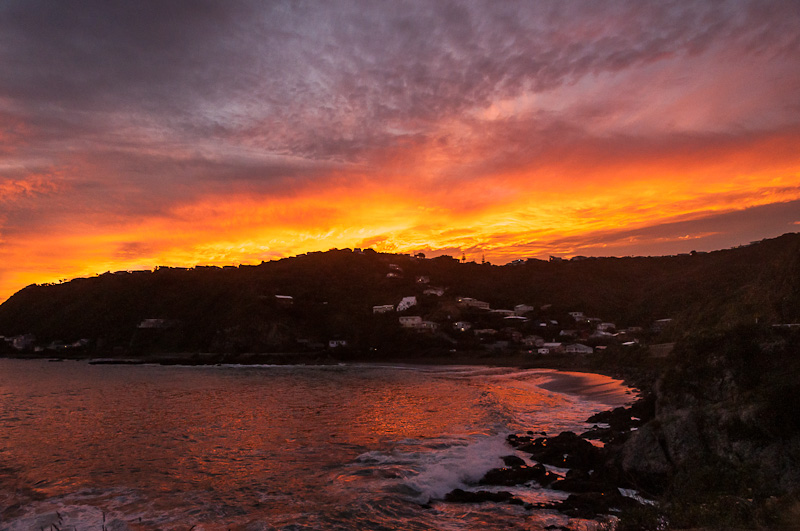
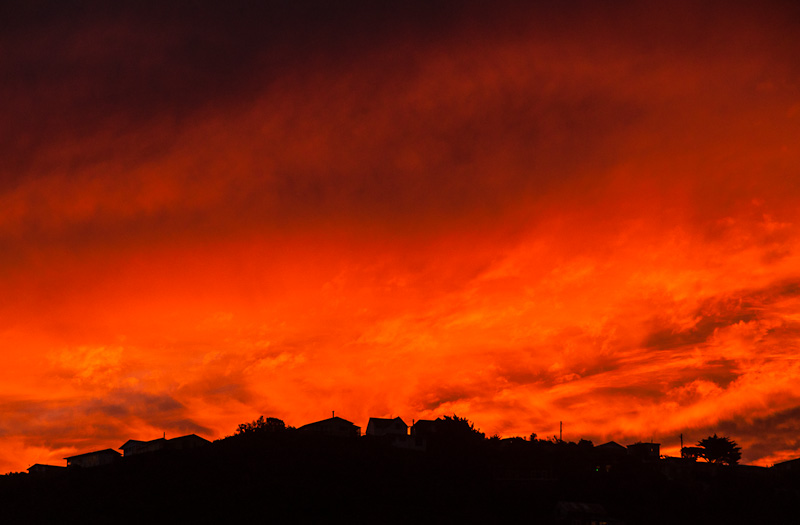
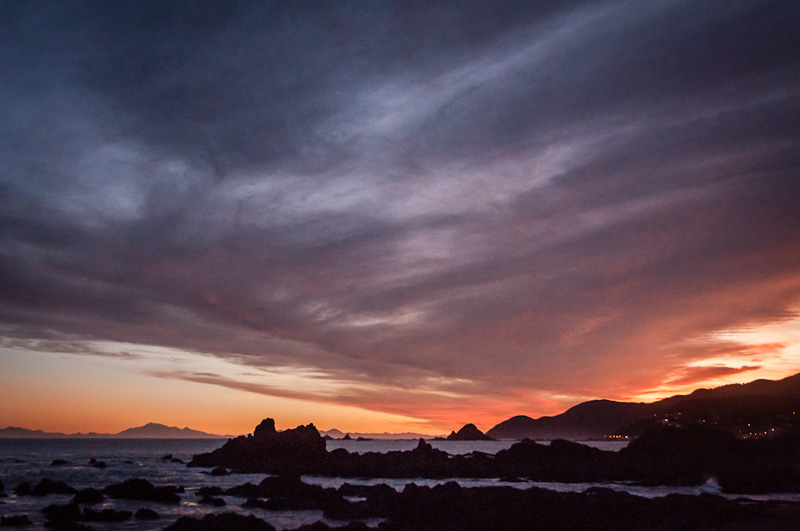
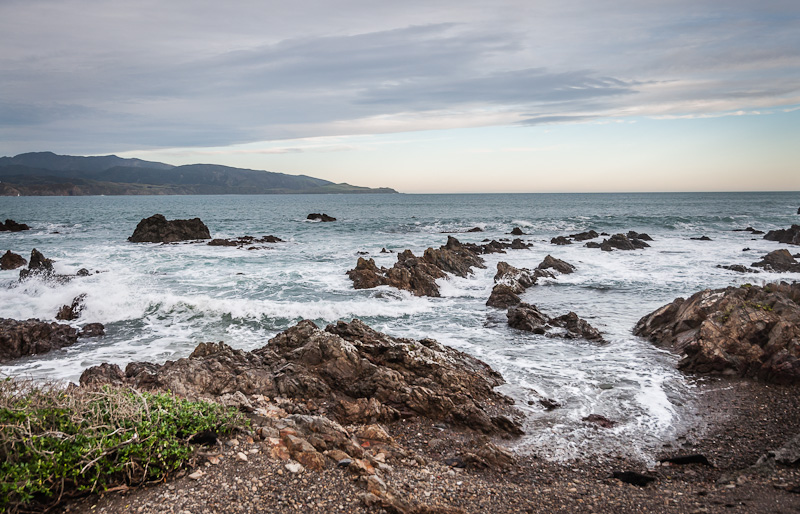
It is not going to be easy.  In trying to work together to care for our planet we humans will need to navigate a lot of differences - it is tough terrain, like the rocky and often stark landscape of Wellington's south coast.  But the water, atmosphere, and living communities of planet earth are changing irreversibly.  Time is running out.  We cannot be complacent. The sun is setting on what we have taken for granted.  The analogy of sunset implies there is a sunrise too.  I think there is hope - we can act.
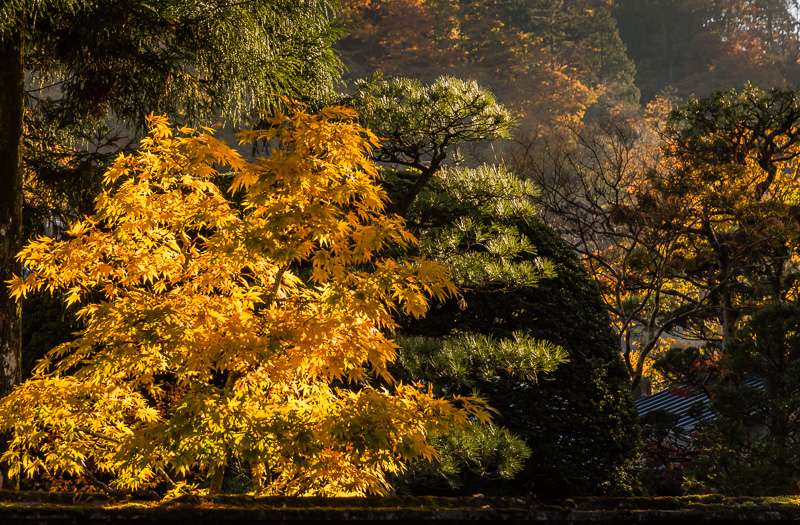
Lighting up our lives - evening light at Nikko

When the human world seems full of ugliness and my mood is dark, I find it helps to look to the light - our gift from the sun, the source of our energy and life on earth.  "Lit up" is a way of describing the feeling of being energised and encouraged, and that is my experience.

It is very easy to be reminded that life on this planet is about much more than us - wherever we are, we can just look around and see, if we dare.  But human folly means that we keep making so many lives (human and other) miserable despite having this wonderful planet as our home, we keep causing suffering through the harm we do to each other and to our environment.  The earth offers us so many opportunities for awe, delight, fascination, curiosity, discovery, pleasure, and creativity - just from being here.  If we regularly take these opportunities we might find a much more life affirming perspective than the current world mood seems to be.

On my recent visit to Nikko I enjoyed one of these dramatic moments - an opportunity for delight.  I emerged from Rinno-ji (a temple with a beautiful garden) to see the trees on the hills beyond lit up by the early evening light.

And in front of me was a golden Japanese maple, framed by pine and cryptomeria (I think), their leaves sparkling and glowing, backlit by the low rays of the setting sun.  A gorgeous arresting sight.  Thank you!

To Japan - and glorious autumn colour (koyo) in Nikko

It is my very good fortune to be visiting a friend in Japan.  I have travelled from the relative cool of spring weather in Wellington to warm weather in Japan (although people here seem to think it is cool) - and some of the autumn colours are very warm too. 

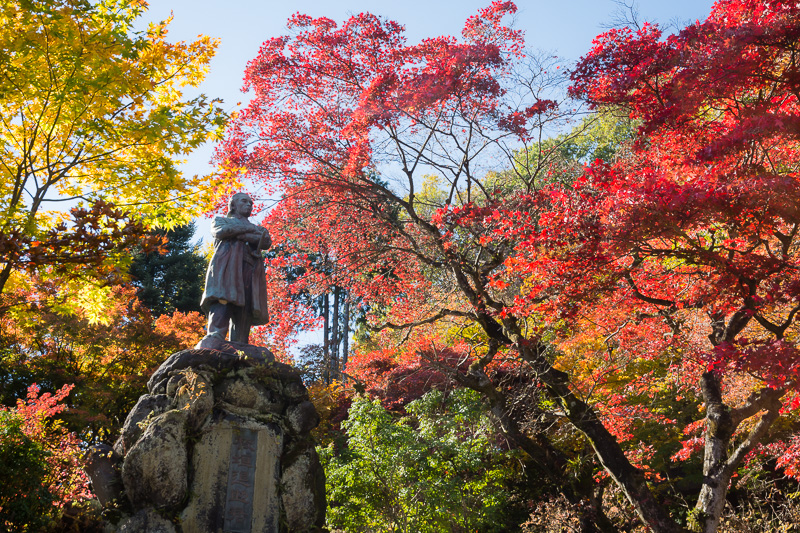
A few days ago I visited Nikko, a small city in the mountains north of Tokyo, famous for World Heritage status shrines and temples in a site of great beauty.  But this time my priorities were elsewhere.  Heading to visit the Nikko Botanical Garden, I saw these Japanese maples in full glorious colour just near Shinyo, the sacred bridge.  (I failed to register the name of the statue-d person.)

It was a gorgeous sunny morning.  The backlighting made the colours really vibrant - and these were not the most vivid that I saw. 

I was one of many many people visiting Nikko that day.  We all go for our own reasons, but I hope that we all came away not only arrested by the beauty of nature, but having some awareness of being part of it and having responsibility towards it - not just the World Heritage site, but our own backyards as well.  The upcoming Paris climate talks come to mind.  Imagine how powerful it would be if we all took action to protect our precious planet from further human-induced damage!

No better place to be - by the Cockayne lawn at Otari

At Otari native plant botanic garden, here in Wellington, there are memorial seats/benches in places of interest and beauty.  As I sit and enjoy them I often wonder about the people who are commemorated and their connection with the place, and I very much hope that they enjoyed the plants as I do.

This seat commemorates Roa Isobel Irons with the words "No better place to be than here with family."  Here by the Cockayne Lawn the family of plants looks bright and inviting with spring colours - scarlet kaka beak and golden kowhai flowers.  And as the days lengthen and warm up, this is a place where families will happily play and picnic.  Indeed there is no better place to be than in the beauty of nature.

Kereru and kowhai at Otari - and it's almost time for the Great Kereru Count

I was fortunate to have a bit of time to get to Otari (native botanic garden) yesterday.  The sun was out, some kowhai were in flower, and it was very peaceful apart from the whoosh whoosh whoosh of kereru flying from tree to tree.  They are such a wonderful sight - their beautiful feathers, and their rather ungainly but often gorgeously plump bodies - like bumble bees, they don't look completely air-worthy.

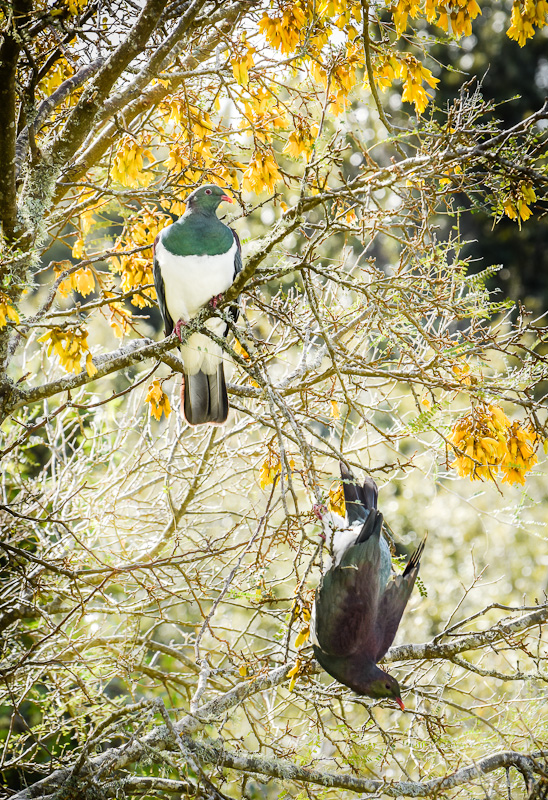
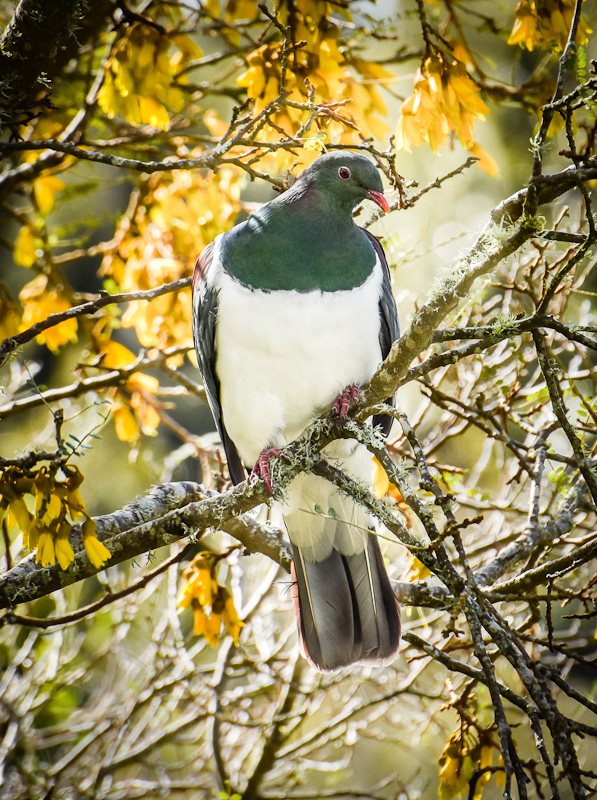
Two kereru were quite settled in a kowhai tree by the Canopy Walkway - so I got a good view.  (I had somehow messed up the settings on my camera, alas - so my picture taking was not of great quality, but this gives you an idea of the special sight.)

One assumed a classic portrait-of-kereru pose

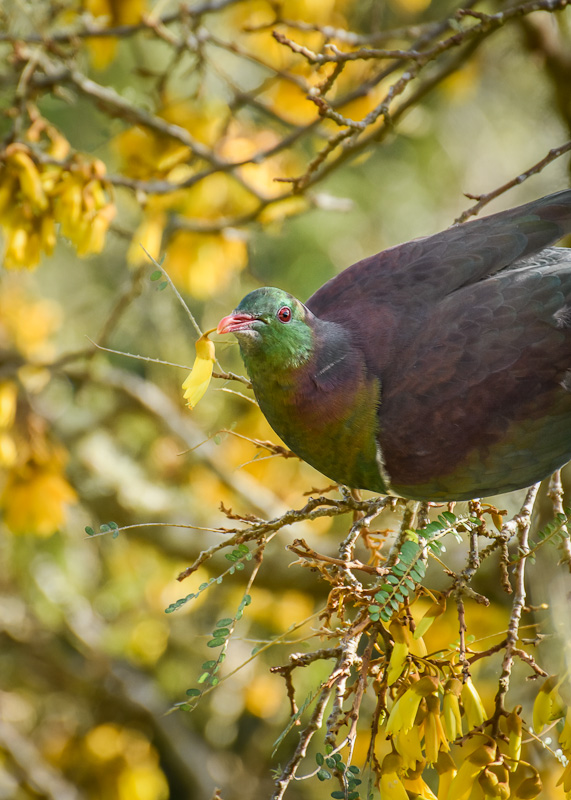
While the other was doing some gymnastics to reach and eat kowhai flowers.

A happy spring sighting and a happy reminder- it is just about time for the Great Kereru Count.