A summer treat - watching the Monarch butterfly life cycle

After a grumpy windy start our summer was warm and settled and as a bonus there was an abundance of butterflies.  In addition to swarms of cabbage whites and lots of yellow admirals, there were quite a few Monarchs, and this year we had swan plants for the fussy caterpillars - they only eat milkweed and the swan plant is the one that they feed on here.  It's the one garden plant that people grow just for it to be eaten by caterpillars! 

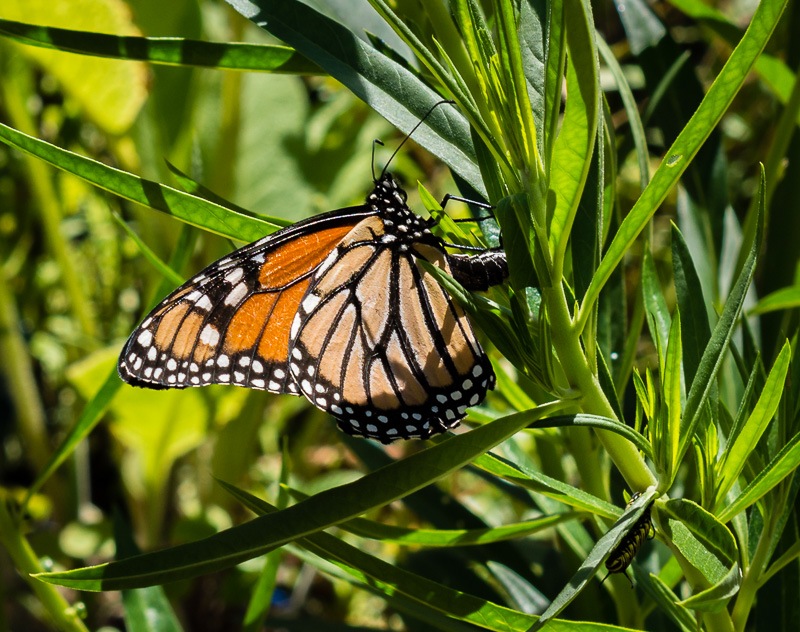
The Monarch butterflies would flit quickly through the garden, feeding and depositing eggs.  They were hard to catch in the act, but here is one - you can see another was there before her.
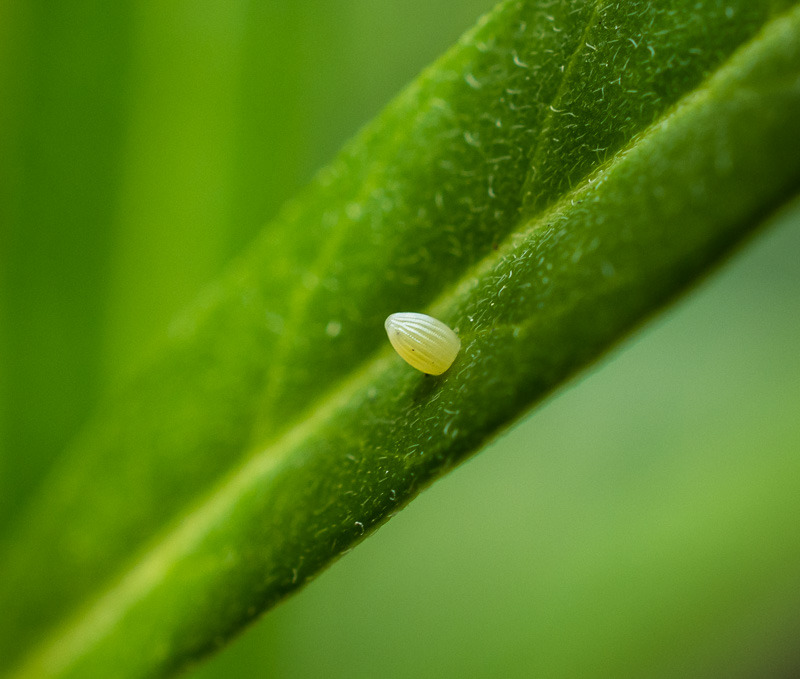
A Monarch egg is such a tiny dot on the leaf.
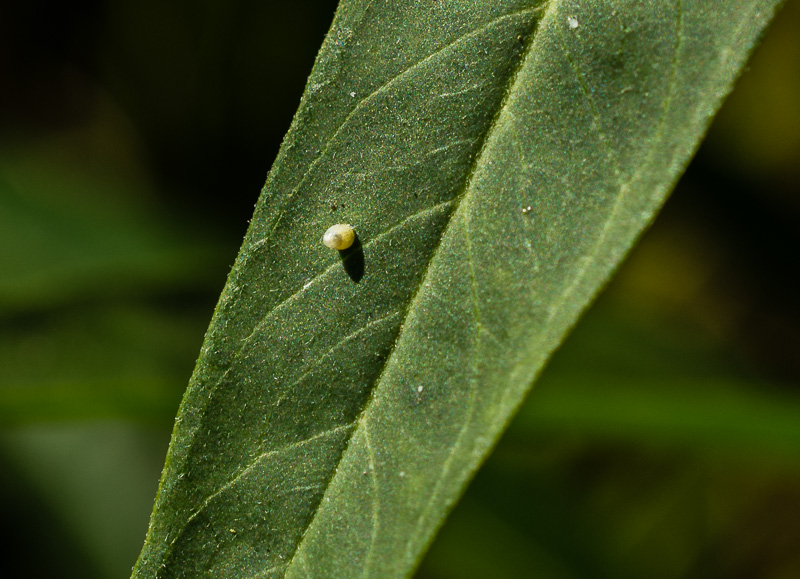
Soon a glimpse of black appears - it is the head of a caterpillar about to emerge.
Teeny tiny and hungry - at first the little larvae/caterpillars nibble on the leaf undersurface.
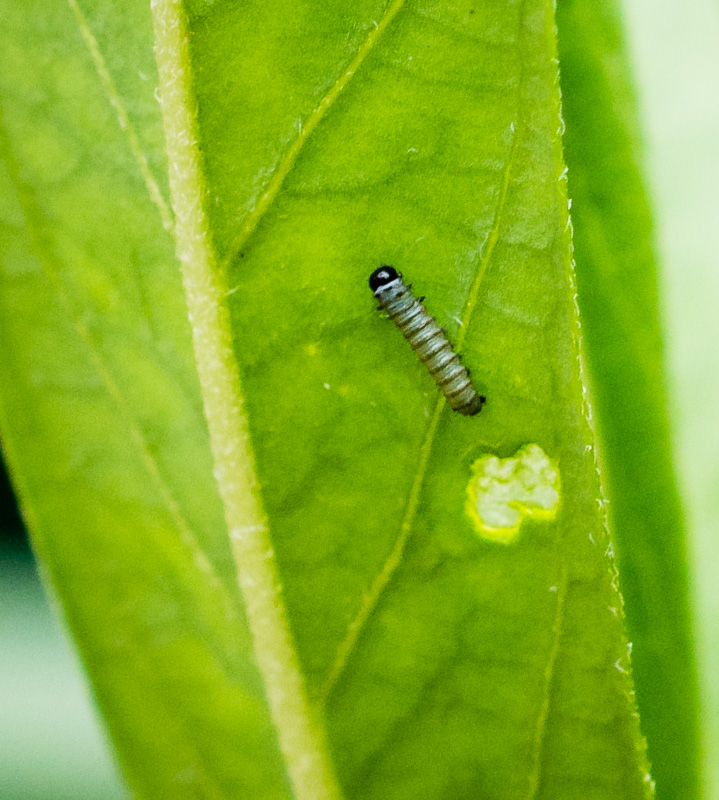
They start growing and moving,
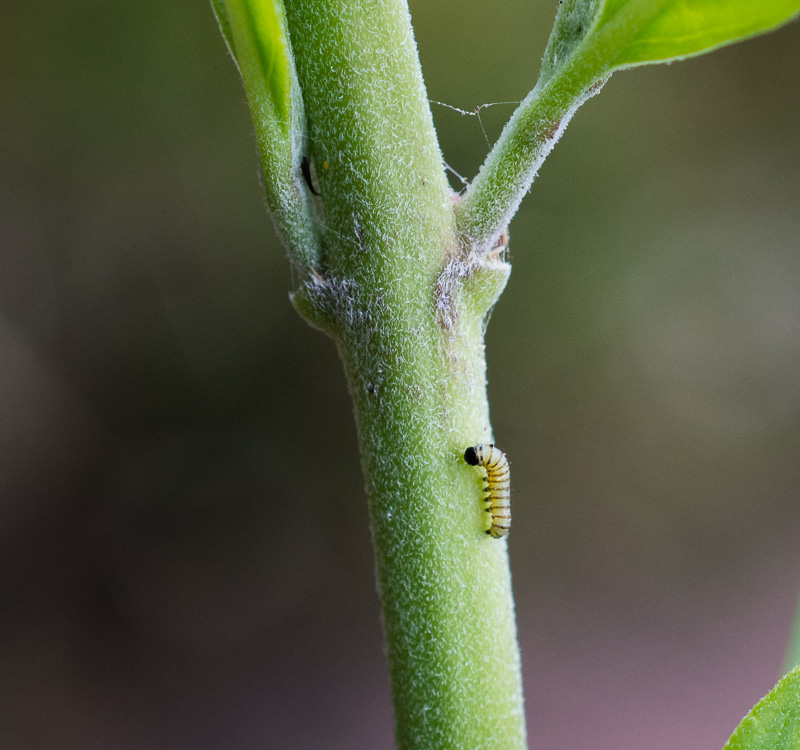
and eating till they need to shed their skin in order to grow. The moult reveals the next stage (instar) - the distinctive yellow stripes and little feelers are beginning to show.
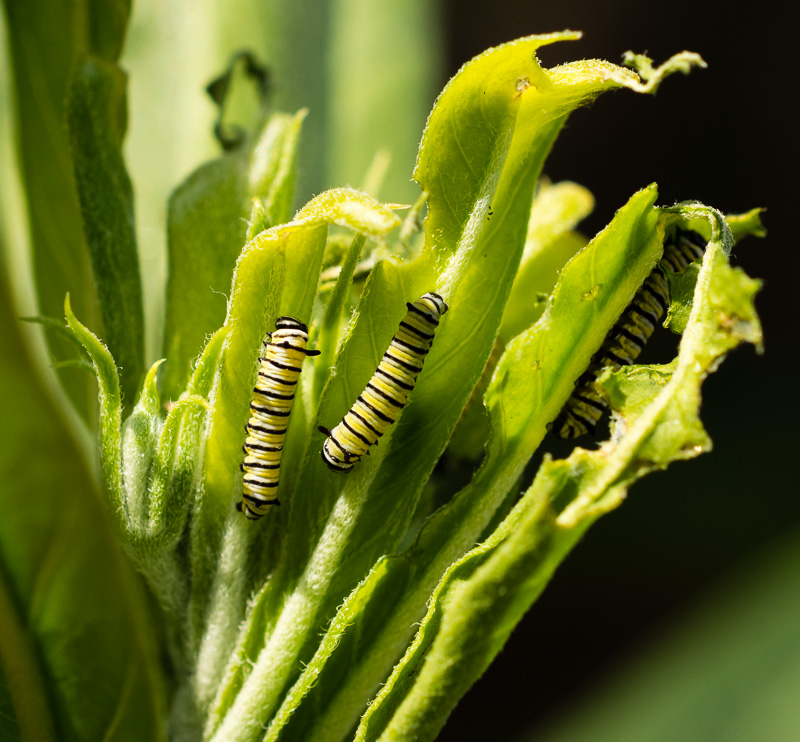
Onwards they go, consuming the tender new leaves of the swan plant, but graduating soon to larger ones - there's a long way to go to get up to big brother/sister size,
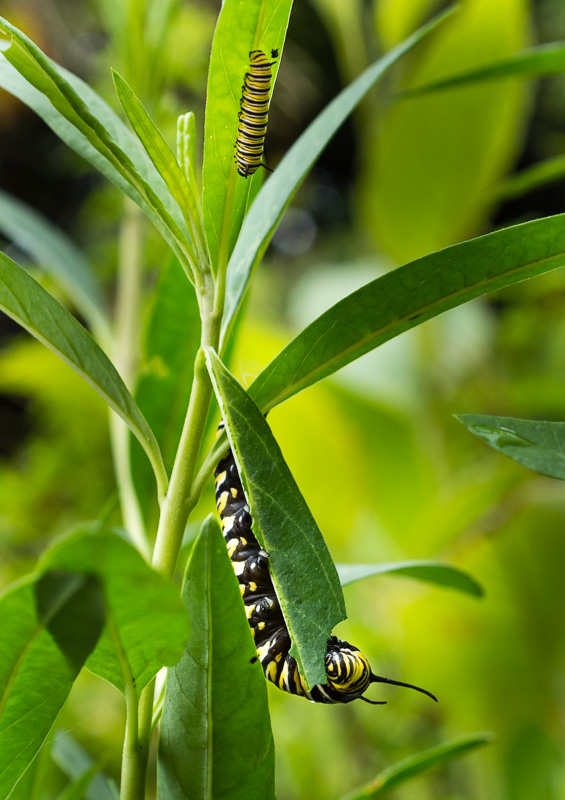
shedding skins to make room for the rapid expansion,
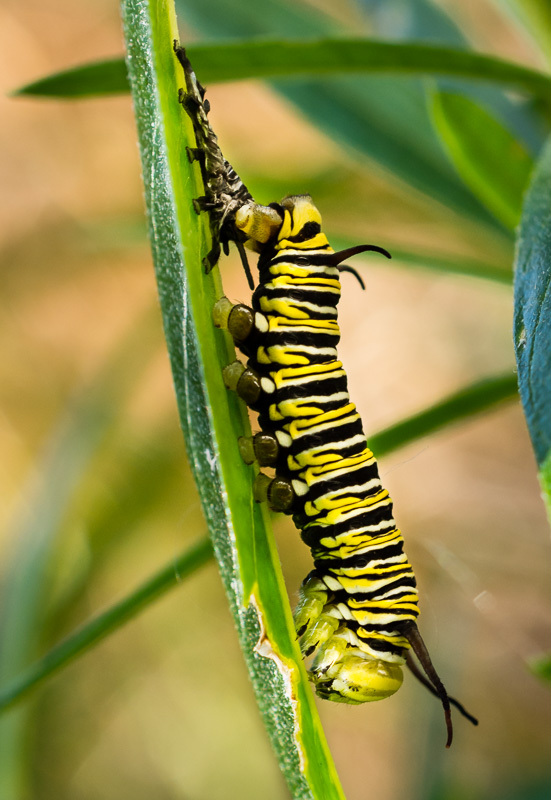
when the leaves are gone, eating the stems, until it's time for the almost magical change. 
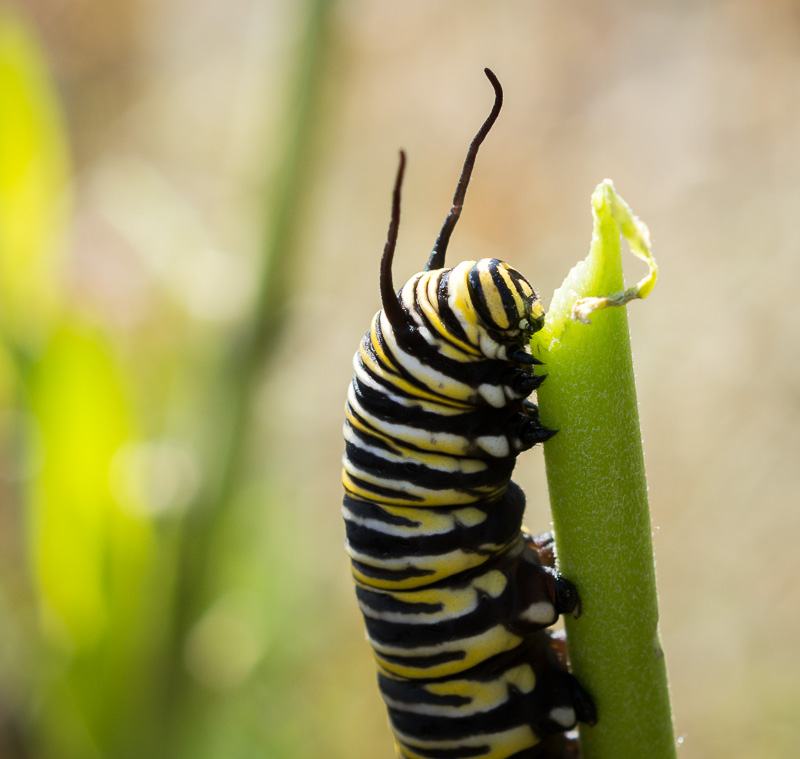
Time to attach itself - hanging in a J-shape,
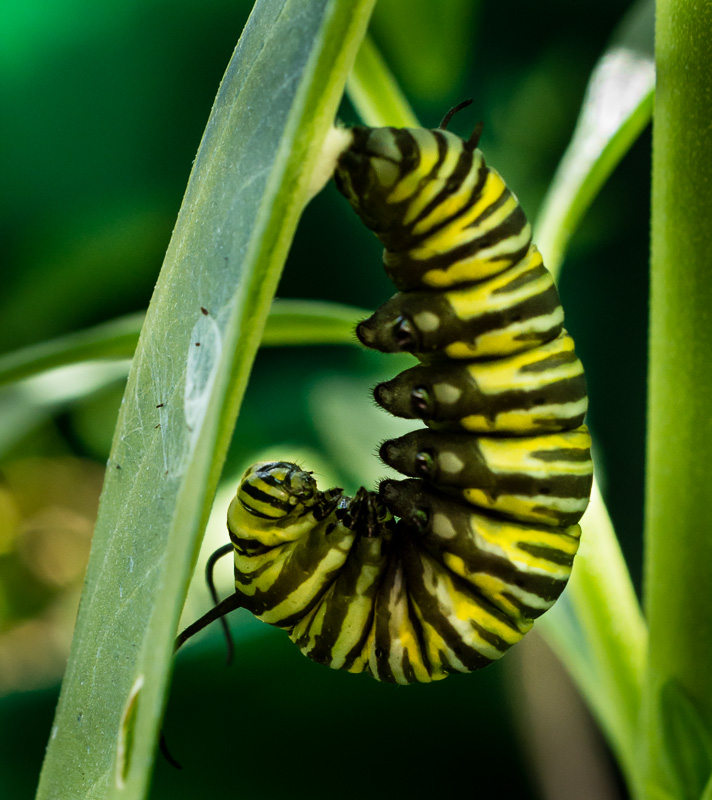
it sheds its skin, changes shape and colour,
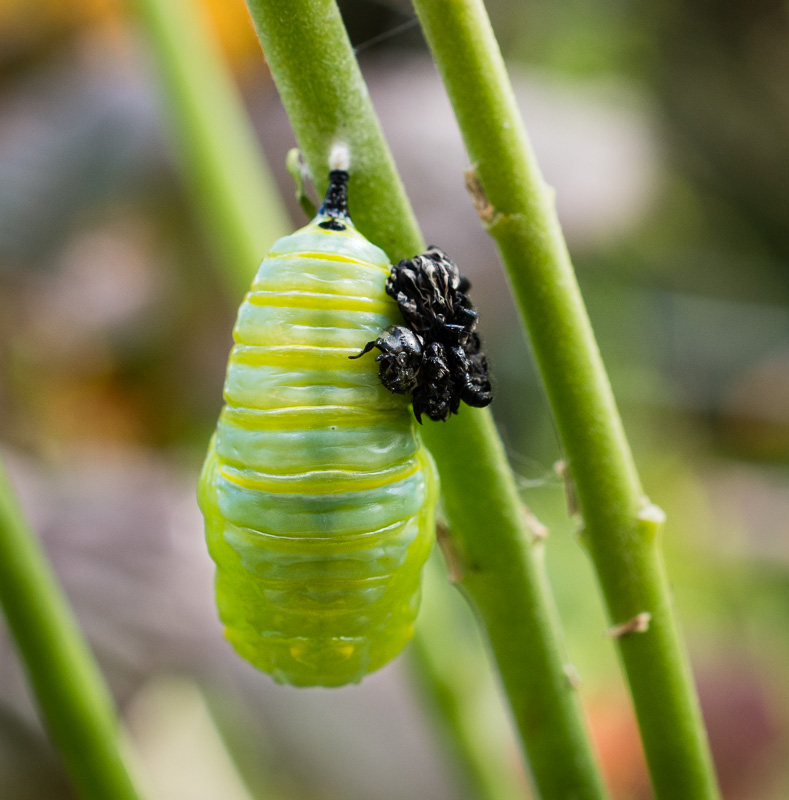
making a beautiful green chrysalis,
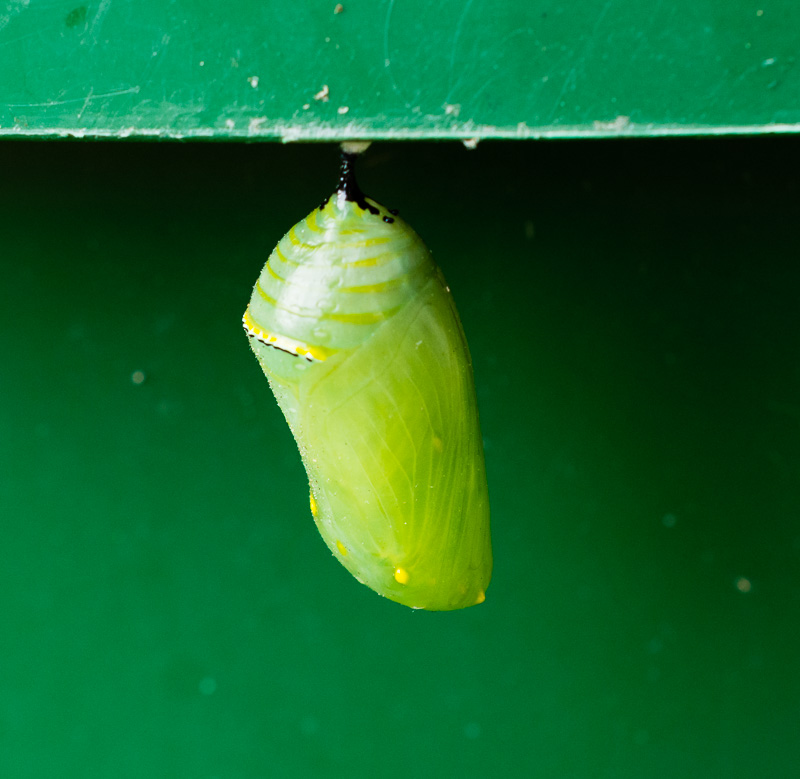
maturing, (here decorated with raindrops)
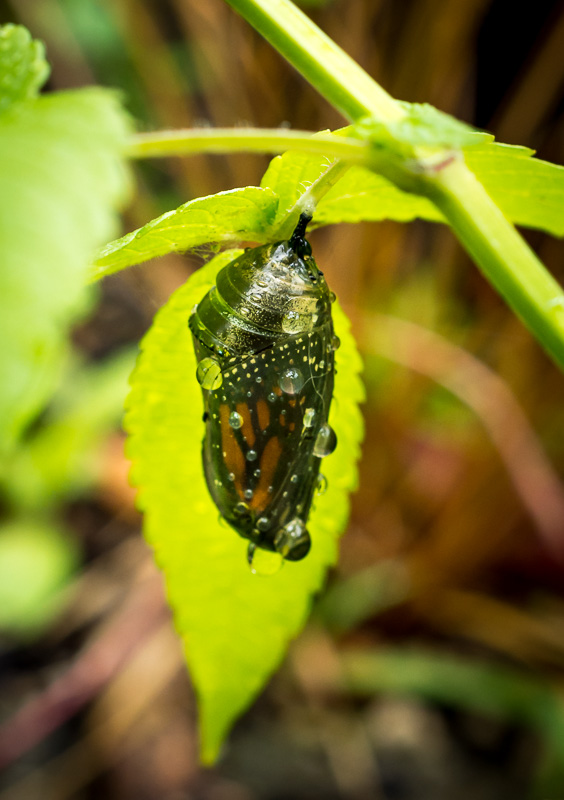
emerging,
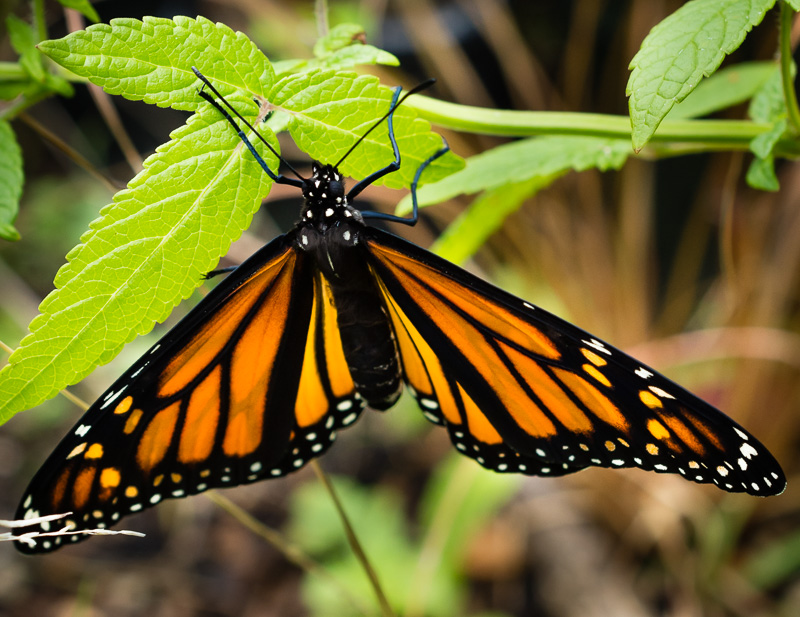
pumping up its wings,
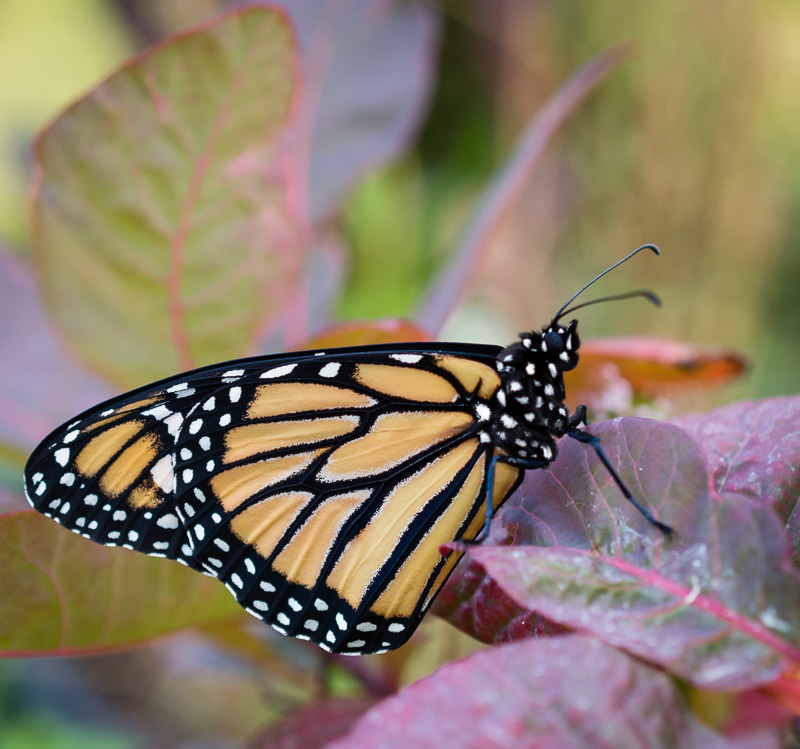
leaving a shell behind.
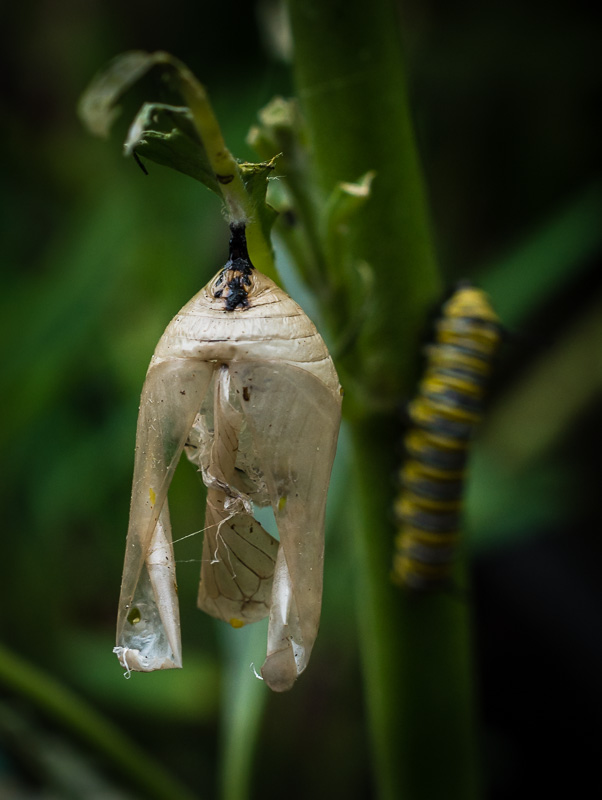
I had to get more swan plants to manage the hungry hordes, and did so with pleasure.  Favourite surprise - the way the little tentacles/feelers on the caterpilars wiggle while the caterpillar is eating - very expressive. 

The last butterfly to emerge was just ahead of the cold snap that announced the end of summer.  Monarch butterflies overwinter in warmer areas of the country.  In the northern hemisphere they manage to fly from Canada to Mexico to overwinter, so there is some hope that even the last Monarch that emerged in our garden managed to escape from our wild south coast.
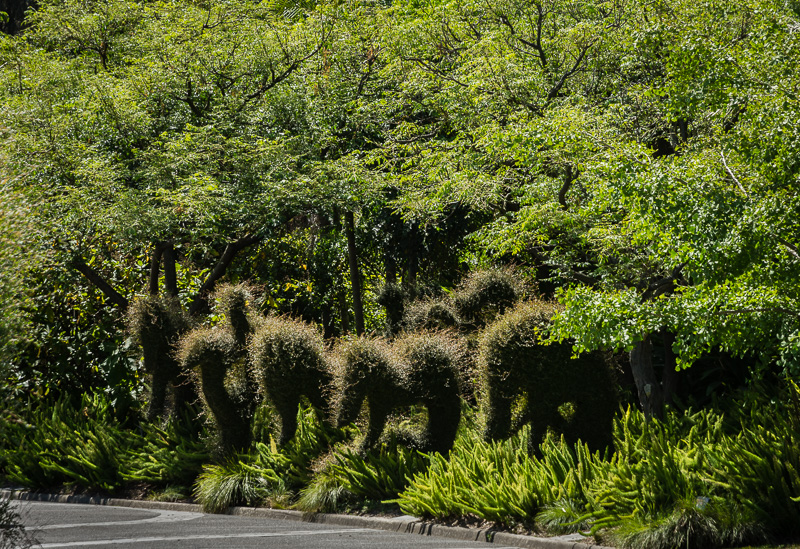
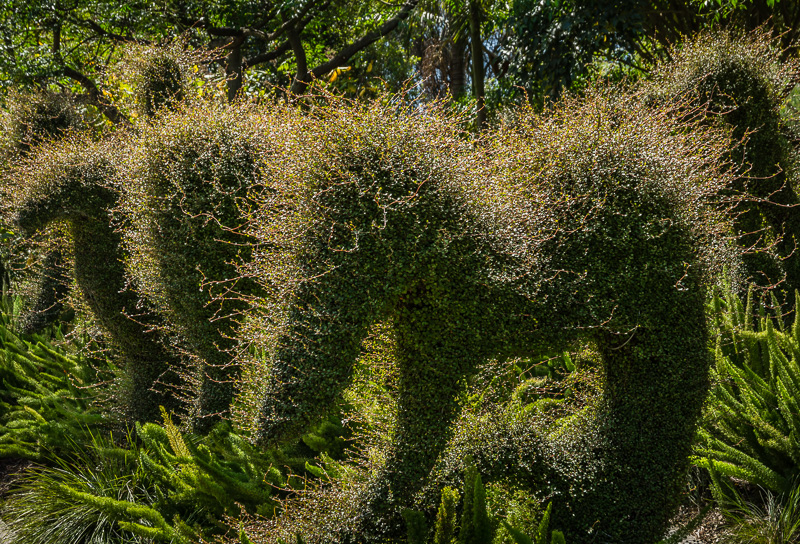
Fun with plants - fantastical topiary at Royal Botanical Gardens, Melbourne

For the child in all of us, and a happy reminder of spring in Melbourne - lush greens and fantastical creatures by the entrance to the Ian Potter Foundation Children's Garden in the Royal Botanical Gardens.  The topiary shapes were (I think) made with Muelenbeckia complexa or pohuehue - our somewhat unruly, potentially invasive and very determined native twining plant sometimes known as wire vine.

The backlighting emphasised how they were due for a haircut!

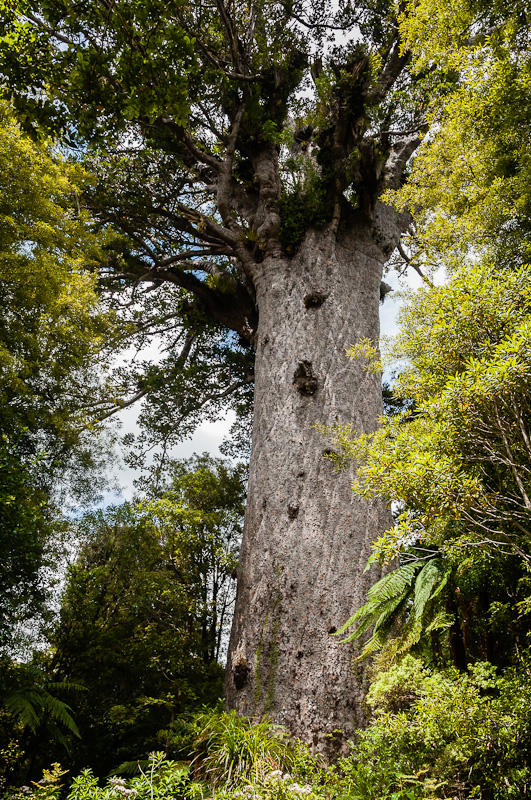
The magnificent kauri - Agathis australis - a taonga that needs more treasuring

The New Zealand kauri is a magnificent tree, one of the largest and longest growing trees in the world and the oldest in New Zealand, appearing here 20 million years ago.  Tane Mahuta is the name given to the largest surviving kauri.  It is 45.2 metres tall, with a girth of 13.7 m.  Its trunk is unbranched to 18 m.  The oldest survivor, Te Matua Ngahere, is thought to be at least 2,000 years old.  It is shorter and more squat with a height of 37.4 m and girth of 16.76m. 

Substantial!  (And phenomenal carbon sinks, a function that will be valued more and more.)   

Here is Tane Mahuta.  Unfortunately I did not have a person in front of it for scale.  To give some idea, the base of the tree is obscured by bush, and if you were able to get close you would be hidden by the plants in front.

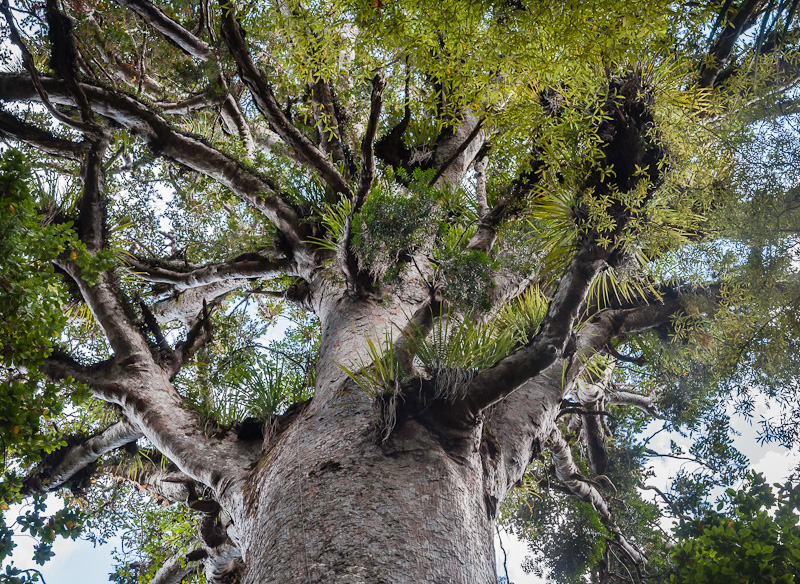
Kauri are slow growing trees, gradually dropping lower branches and changing from a conical to a columnar shape with a flattened mop of branches at the crown.  Mature kauri crowns have huge branches which support an abundance of life with ferns, mosses, epiphytes and lianes.

Below we see the view up a smaller tree than Tane Mahuta.  It gives a limited idea of the scale of life supported by the crown.  People who study the ecosystems in the crowns need the skills of arborists and a head for heights.  There is a lot of life up there. 

But the future of the kauri is uncertain.  4 million acres of forest were here.  They have been reduced to 18,000 acres of forest with the vast majority of those trees having been felled or destroyed by European settlers from 1820 on, with surges of such destruction occurring in the late 1800's and 1920's to 30's.  Even as recently as the 1960's the government was facilitating logging of pristine kauri forest.  The wood is fine grained, hard, and beautiful.  Because the trunks are straight and unbranched to a considerable height, kauri were valued for use as masts and spars for sailing ships.  You would think that such special timber would be valued.  But it was wanton destruction - about half of the enormous volume of timber from the felled trees was burned. 

Now the kauri is threatened by kauri dieback a disease specific to New Zealand kauri, caused by Phytophthora agathidicida.  It kills kauri trees, and it is untreatable and spreading. 

What are we doing?  On one hand there are efforts to stop further spread of the disease - eg protection of the vulnerable roots around those trees that we visit to admire, special walkways and stations for cleaning shoes to stop the spread of the infection.  And on the other hand, there has been a weakening of the law that identifies trees that should be protected.  So an apparently healthy urban kauri growing in an area where dieback is present had no protection when the people who bought the land on which it grew sought permission to fell it and other substantial trees, in order to build a house.  If it has resisted dieback it is very precious and may help the fight against the disease.  Too bad - concern and protest and occupation by tree-sitters delayed but did not stop the destructive intent of these people.  It has been ring-barked - a cruel injury which means there is little chance that it will survive. 

So, wasteful colonial attitudes do seem to persist to this day.  And a government which removes protections previously in place for such trees seems like a blast from the past too. 

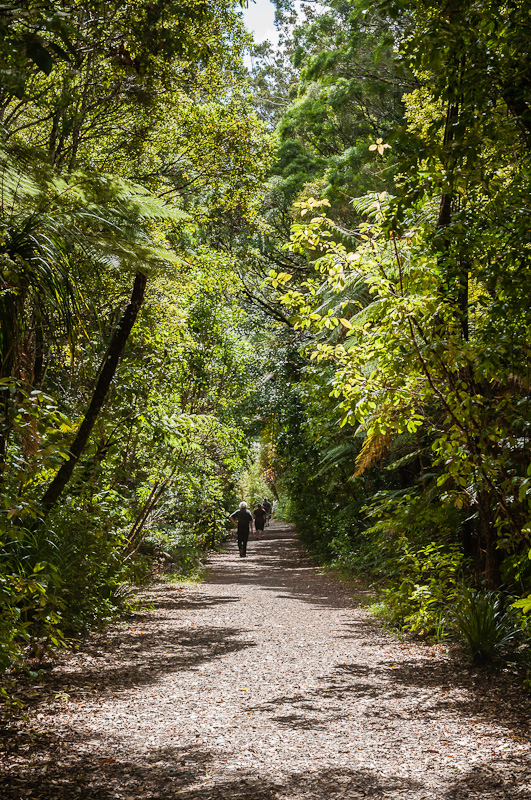
We are so small - on this walk in Waipoua Forest it is the smaller trees and understory that dwarf the walkers.

And yet our carelessness and lack of foresight might mean we lose this taonga (treasure), the kauri.

We humans are a puzzling lot.

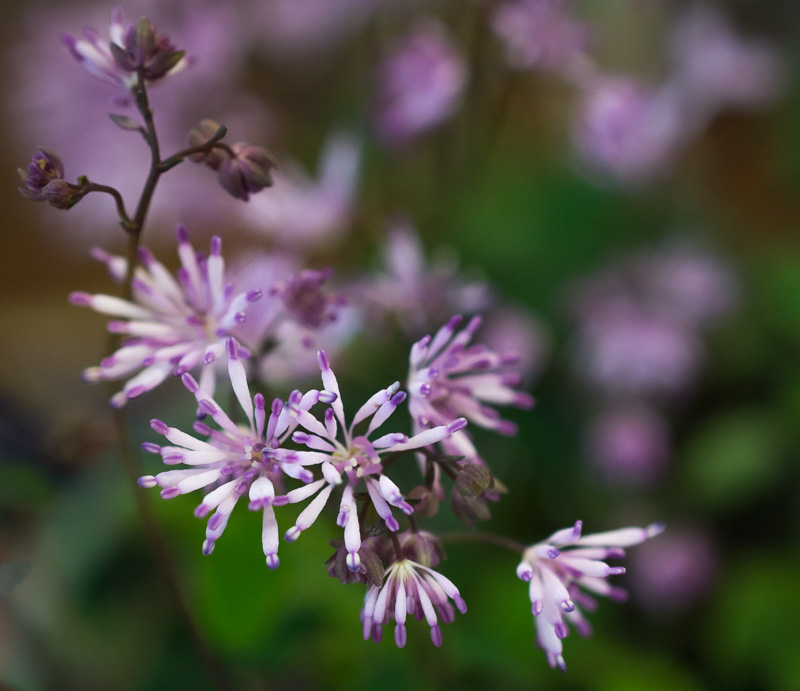
Thalictrum kiusianum - Kyushu or dwarf meadow-rue - one of my tiny treasures from Hokonui Alpines

Apparently we have a limited supply of willpower each day.  In New Zealand we also have a limited supply of specialist plant nurseries - many have closed over the last twenty or so years.  So there is a shrinking list of plants available to buy.  The vagaries of garden fashion are partly to blame but, more importantly, fewer people have the time or interest for gardening.  However, a recent development is the increased interest in growing vegetables and fruit.  I think this is great for many reasons, and maybe it will be the gateway for more people to discover other horticultural delights.

But I need no encouragement - I am very susceptible to the lure of almost any plants!  And Hokonui Alpines have a good catalogue, often refreshed with new and intriguing additions.  So especially in times of will-depletion I find the catalogue quite irresistible, knowing that they offer plants not available otherwise (and that they are so friendly and helpful and provide such good plants.)  I succumbed recently and was delighted to receive a box of plants from them a few days ago. 

But I need no encouragement - I am very susceptible to the lure of almost any plants!  And Hokonui Alpines have a good catalogue, often refreshed with new and intriguing additions.  So especially in times of will-depletion I find the catalogue quite irresistable, knowing that they offer plants not available otherwise (and that they are so friendly and helpful and provide such good plants.)  I succumbed recently and was delighted to receive a box of plants from them a few days ago.  Here is one - not impossible to get from other sources, but a treasure all the same. Thalictrum kiusianum, known as Kyushu meadow-rue (it is native to Korea and Kyushu, Japan) or as dwarf meadow-rue.  It is a low growing (up to about 15cm or 6 inches high) groundcover from moist woodland alpine areas, conditions I must now try to emulate.  It makes a mat of little leaves that look quite like the leaflets of a maidenhair fern.  Above the midgreen leaves, tiny starry flowers are clustered on slender stems giving a light airy almost fluffy impression.  It looks delicate, but I hope that it will live happily here.

A New Year and sunset fireworks over Taputeranga

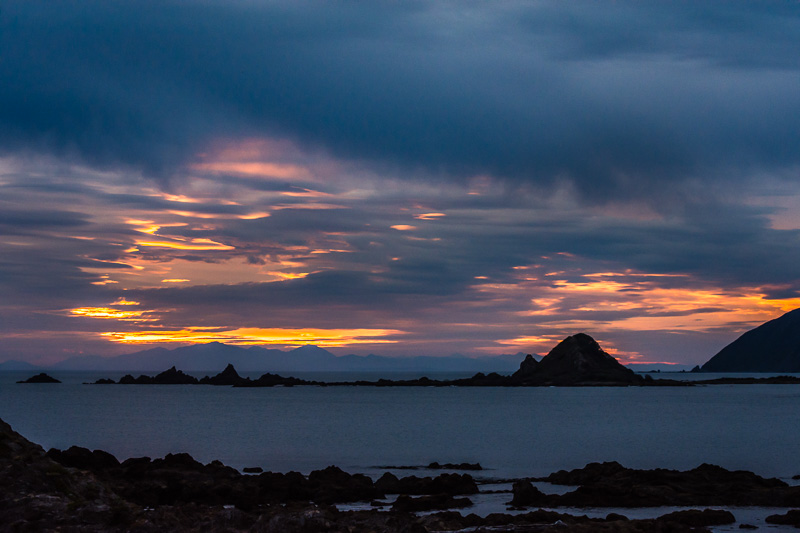
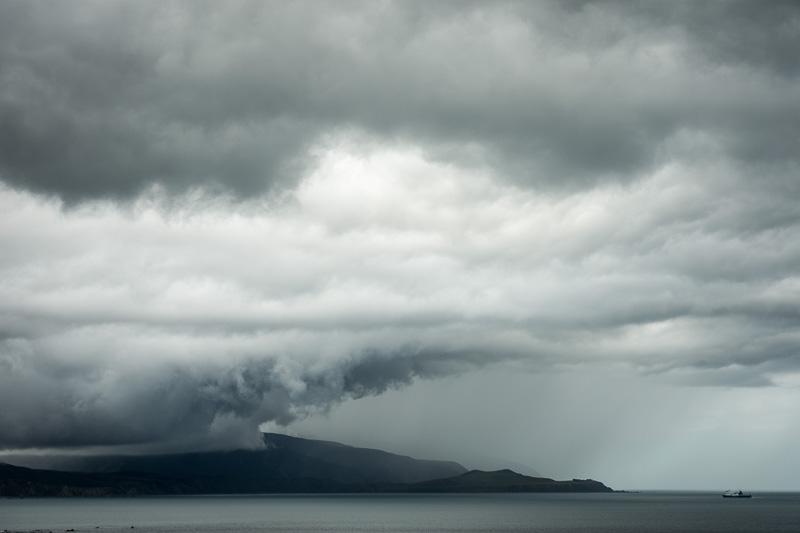
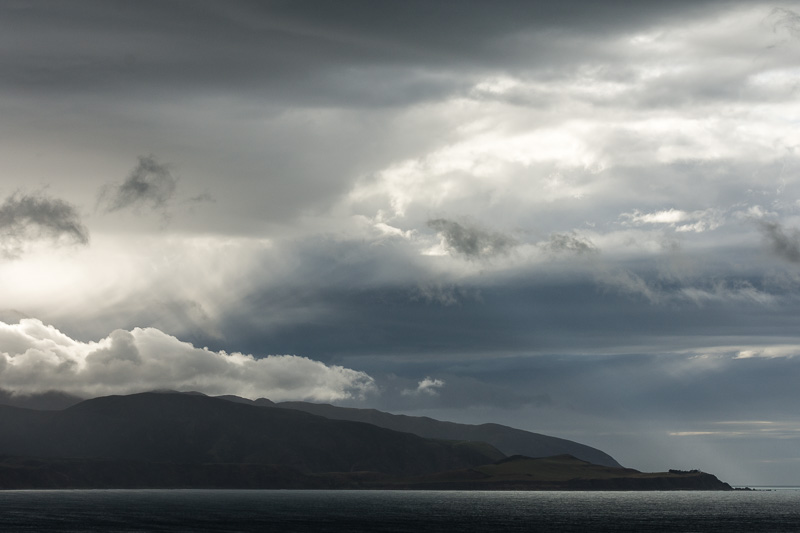
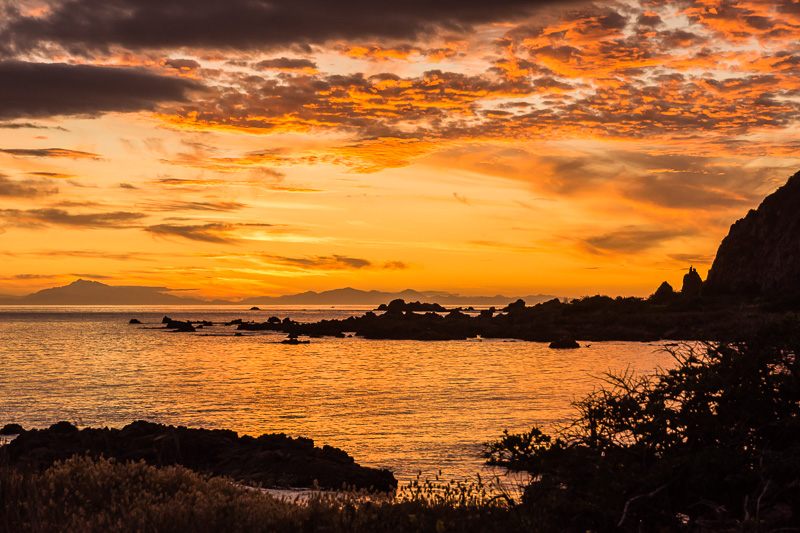
We had a week of uninterrupted warm summer weather with clear blue skies and almost no wind - the latter rather disturbing for Wellingtonians, accustomed as we normally are to plenty of air movement!  The first day of 2016 was hot and sunny - but wet weather was coming down from the north.  So by the time of sunset the sky over Taputeranga (the island of Island Bay), looking to the South Island in the distance, was dramatic.  It reminded me somewhat of the fireworks of New Years eve.

Another year has begun with all the beauty and drama of nature.  And I remember why I am doing this. 

I see the environment as a source of endless delight as well as being the source of our sustenance, and I want to share with you my love for and interest in the world of living things.  This is our world - we are part of it and we rely on it.  If we care about our future, we must care for our environment - see it, appreciate it, learn about it, and work on being good guardians.  We can all do this if we own our responsibility and power.

In the words of one of my heroes, Wangari Maathai, (who founded the Green Belt Movement which has planted more than 10 million trees) "You cannot protect the environment unless you empower people, you inform them, and you help them understand that these resources are their own, that they must protect them."