Christmas-y colours of spring - Kaka beak, Clematis Sweet Hart

Well, it must still be spring - the weather here in Wellington remains capricious and, frankly, not all that pleasant.  Gales have been blasting tender new growth and the southerlies keep bringing the temperature down - to cold.  

But summer and Christmas are coming.  Here's to the bright colours of early spring - seen in the Christchurch Botanic Gardens - and the coming festivities:

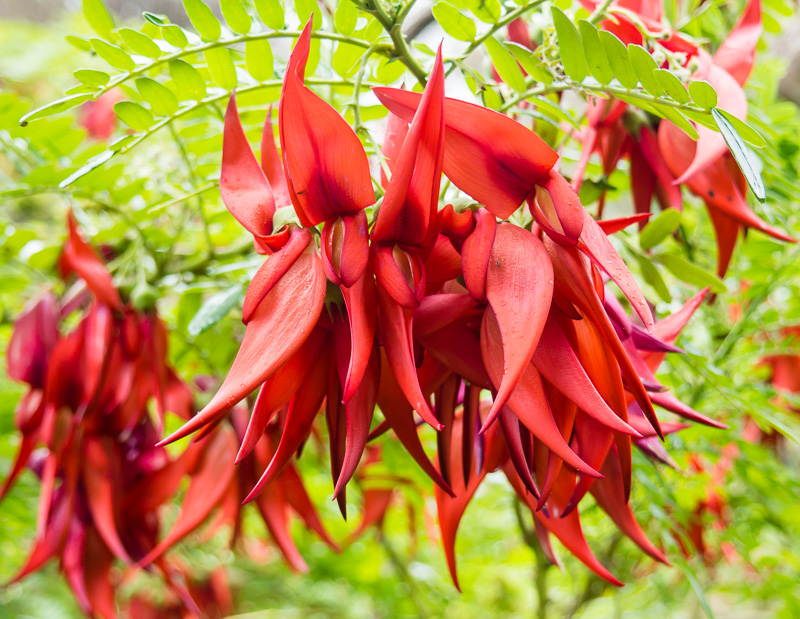
The red and green of Kaka beak (Ngutu kaka)

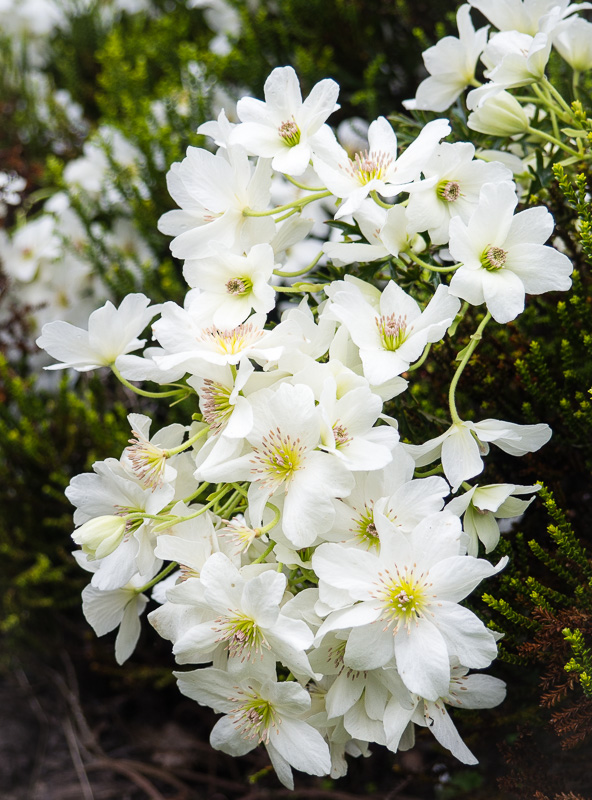
 And the brilliant white of Clematis Sweet Hart, a hybrid native clematis. 

These were in flower a month or so ago, but I remember them fondly amidst the red, green and white Christmas decorations that have been proliferating for weeks.

A winter treat - sunshine and Monarch butterflies at the Wellington Botanic Garden

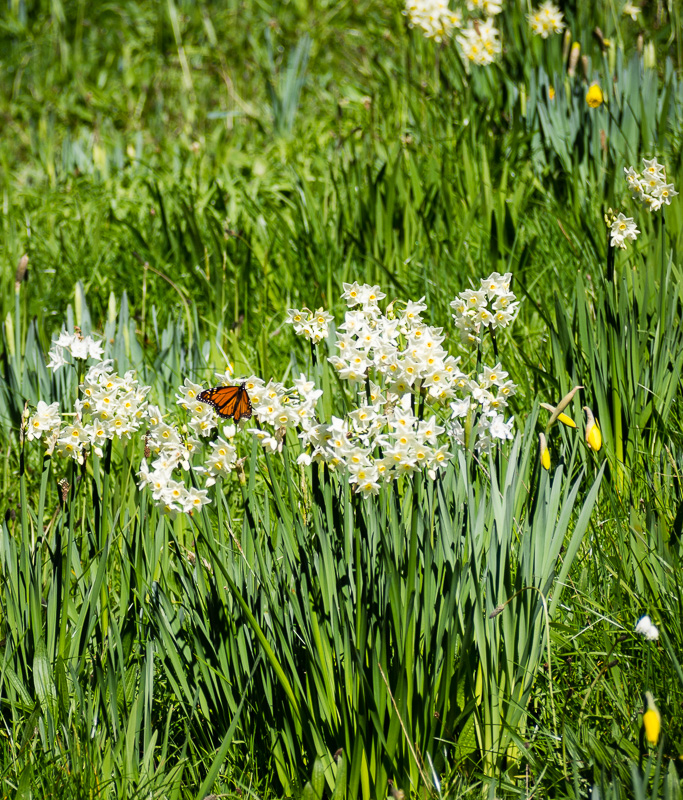
Wellington on a good day - no wind, sunshine, and signs that spring is getting closer - what could be better!   Well, a walk in the Botanic Garden and a visit to the scented garden made it better still.   On the grassy hill by the Treehouse visitor centre, early Narcissus - white and yellow (probably N. tazetta) - are already blooming brightly.  But what were the flashes of orange that I saw?

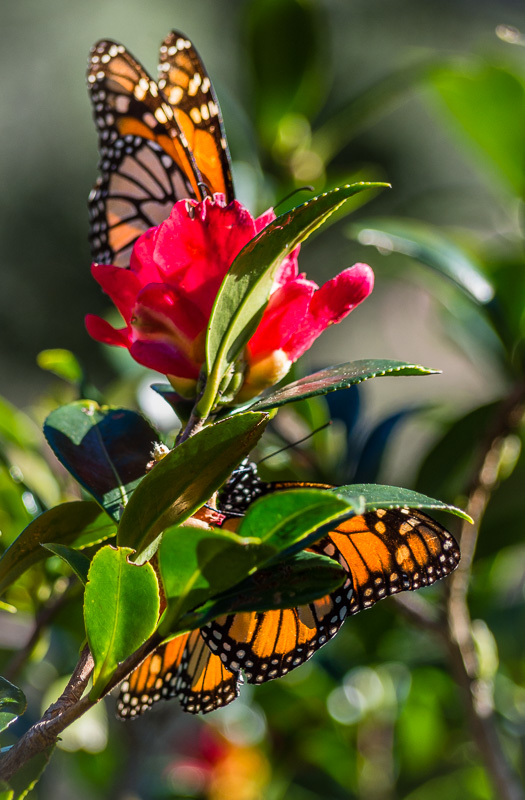
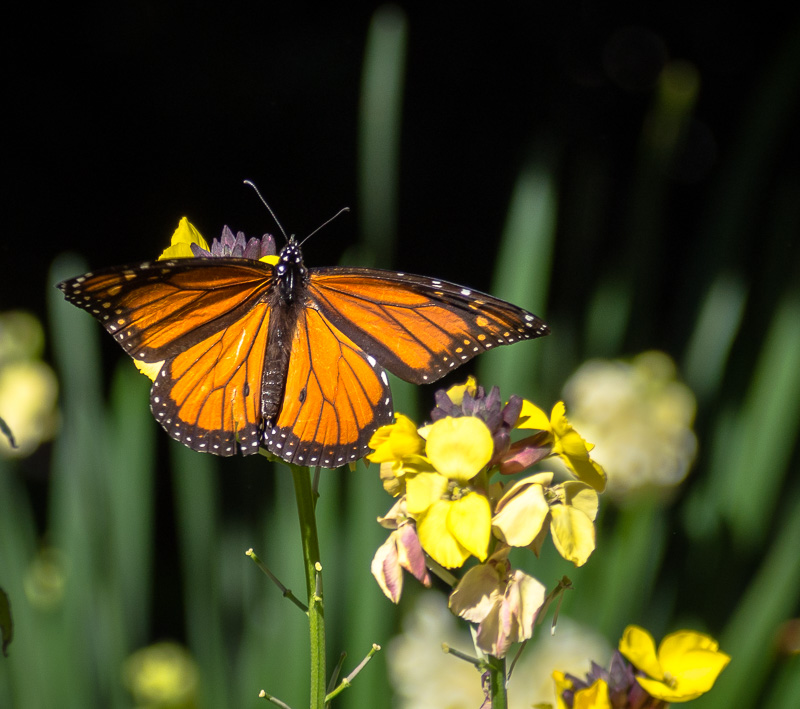
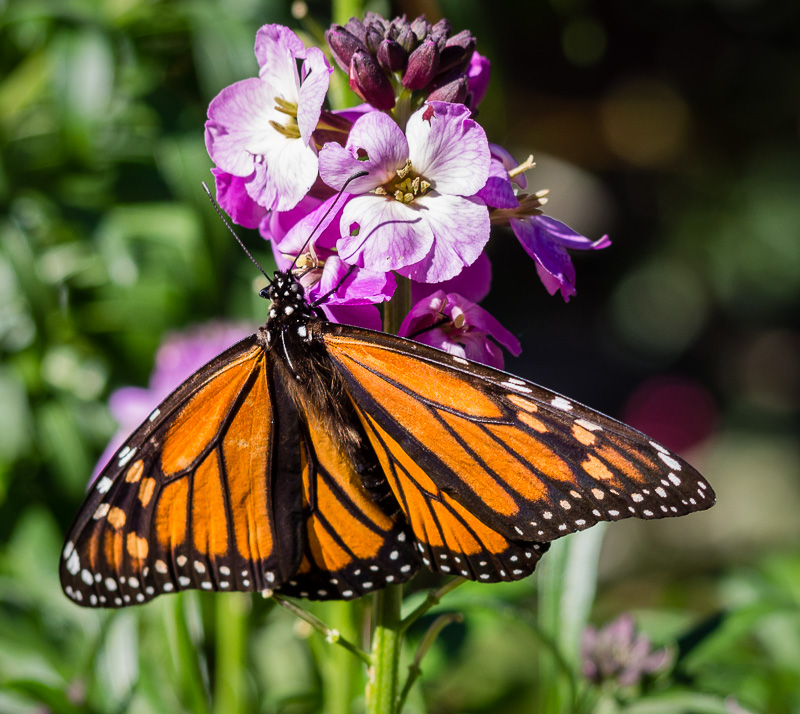
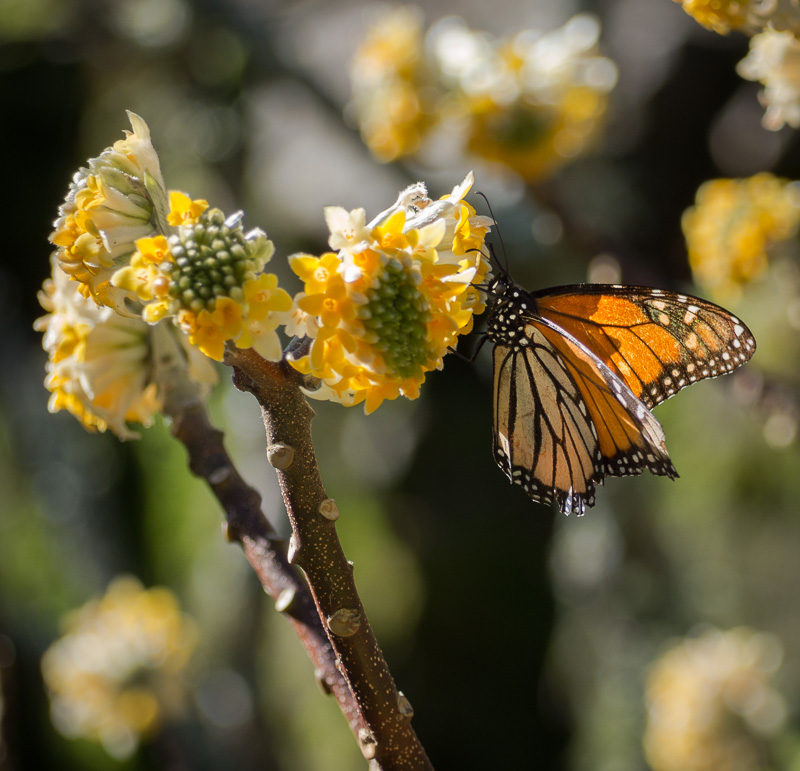
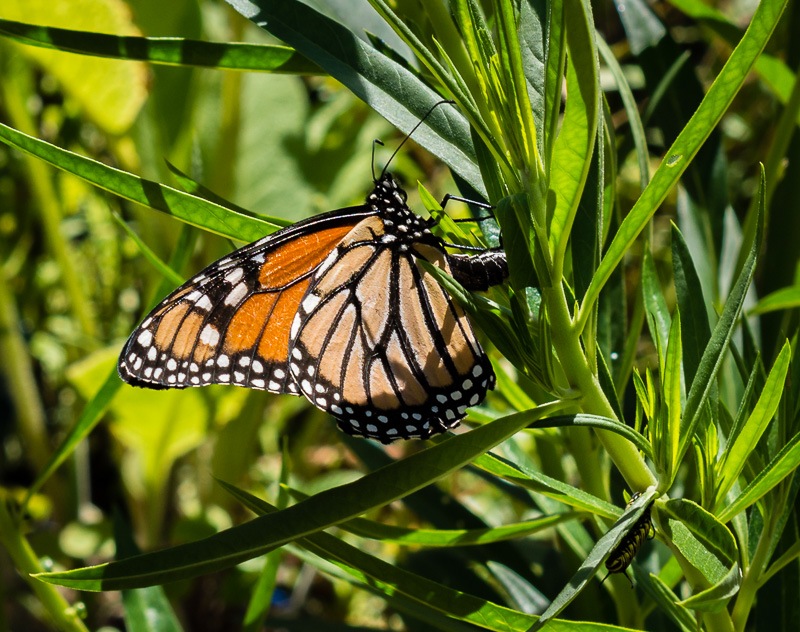
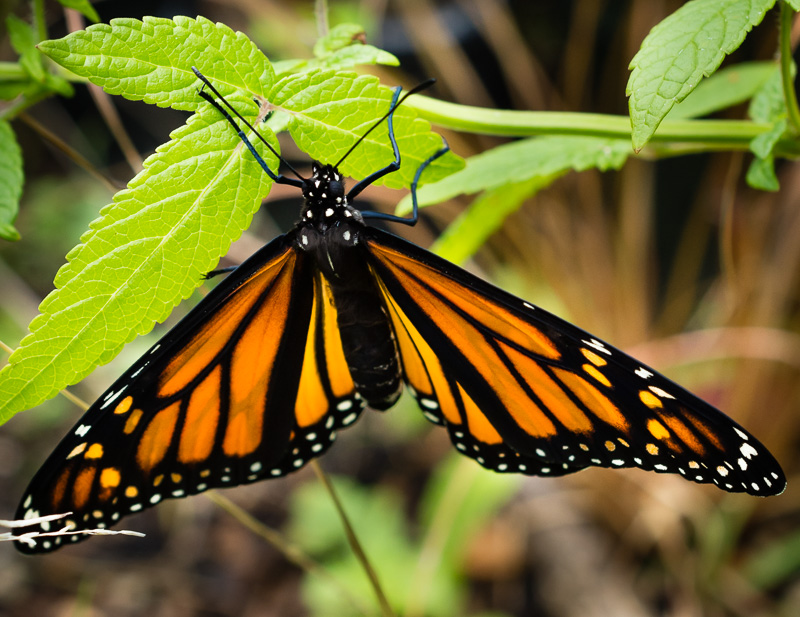
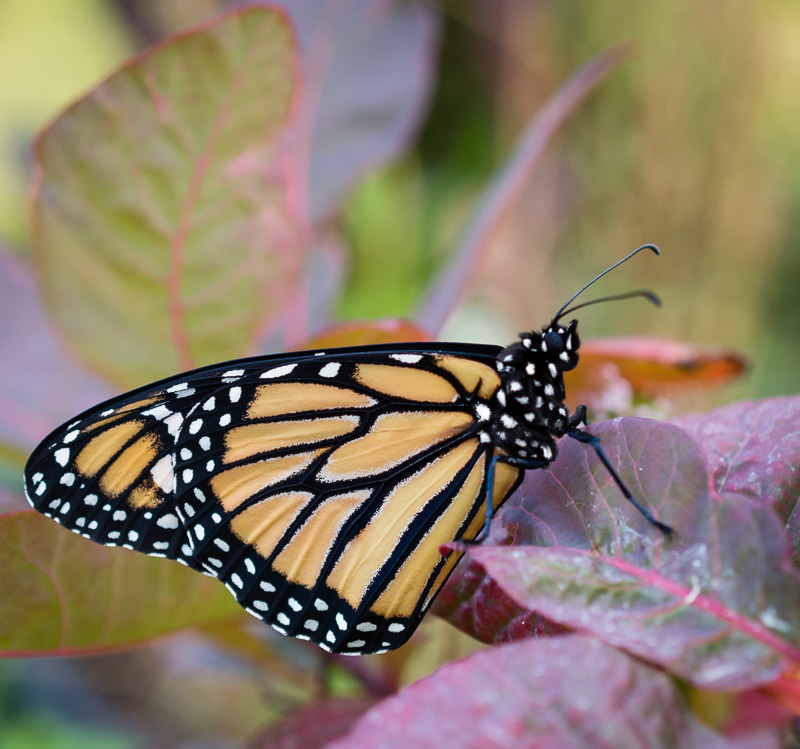
Monarch butterflies were feeding and flittering and chasing each other and resting in the sunshine.  Evidently they have been overwintering here.  After the cold, rain and gales of the previous week, they appeared to be making up for lost time.  Alas, I was not equipped to photograph the ones on the wing, but I happily photographed some of the butterflies more intent on feeding.  These ones on a camellia bush were so settled they looked more like colourful flowers.

There was quite a choice of flowers for a hungry butterfly - yellow wallflowers,

pale purple wallflowers,

or "yellow daphne" - Edgeworthia chrysantha also known as oriental paperbark,

not to mention heliotrope, daphne and other scented lovelies in the garden.  The butterflies' wings looked a bit weatherbeaten, but they were still a magnificent sight.  And the scented flowers were a treat for me too.
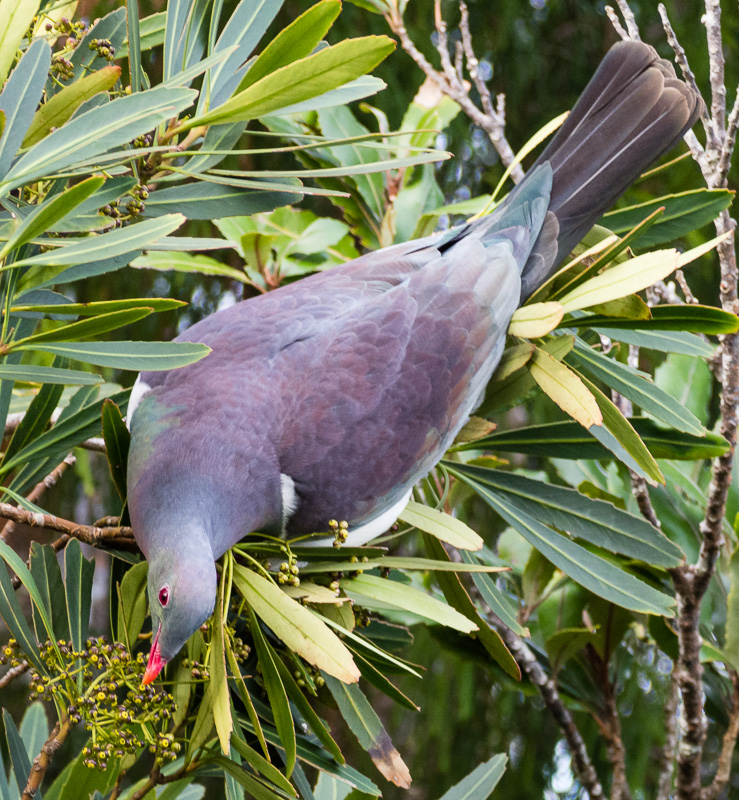
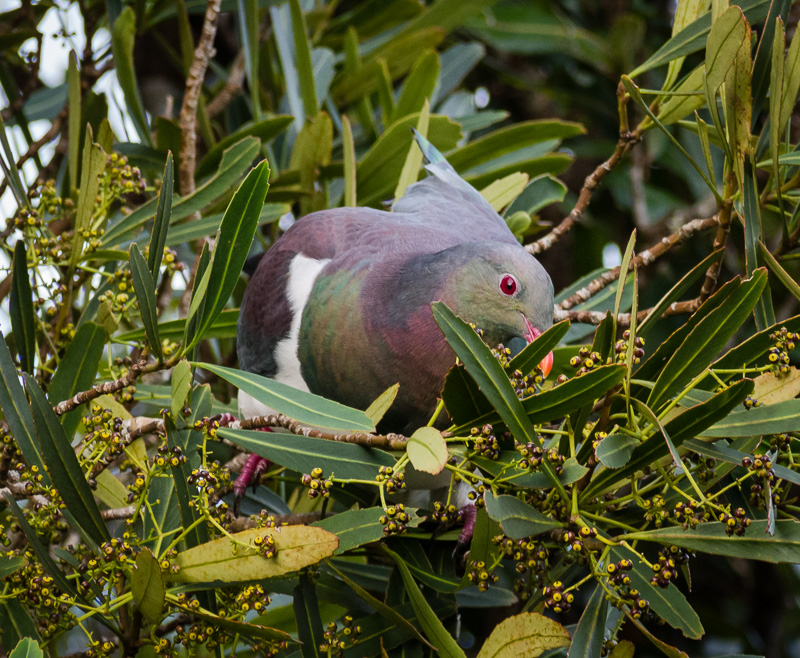
Caught in the act - kereru (NZ pigeon) scoffing horoeka berries

I love pathways that get you up high and close to trees.  I was on one at the Arataki Visitors Centre in Auckland's Waitakere Ranges.  There you have a great view sweeping across bush towards the city and the Waitemata and Manukau harbours.  And there is a walkway that threads around some mature trees. 

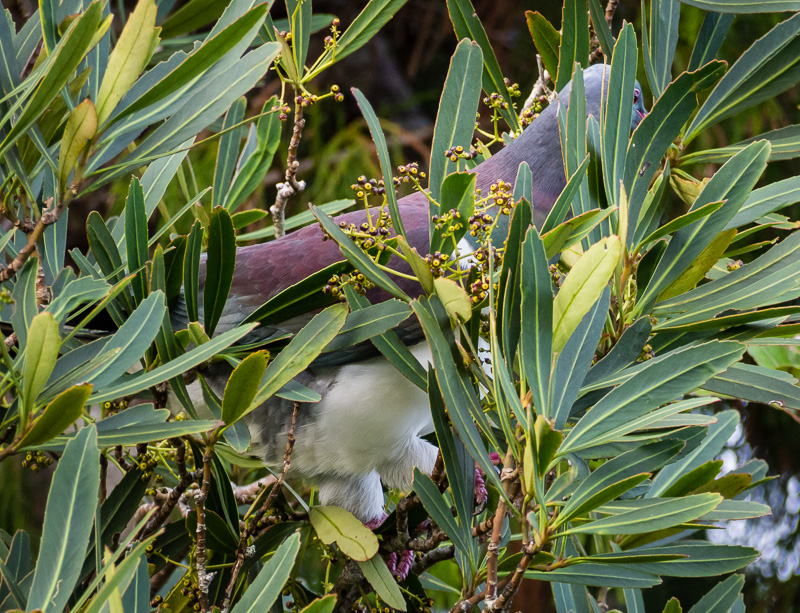
As I walked along it I heard an odd sort of scrabbling sound coming from one of the trees - a horoeka or lancewood (Pseudopanax crassifolius).   At first, there was nothing obvious to see - but then I caught a glimpse of large red claws, white feather pantaloons, and a back with purplish-green feathers.

A kereru (New Zealand pigeon)!  It's a large bird - weight around 650 grams, length 51 cms - so an awkward size for the rather slender branches it was perching on.  But the numerous berries were obviously of interest. 

It struggled a bit to get to them, and some gymnastics were required - stretching and balancing.  But it was intent on scoffing those little berries. 

The kereru is a frugivore - a fruit eater - but will also eat flower buds and leaves, depending on what is available.  With its big bill it is able to eat the large fruit and drupes of a number of native trees.  The flesh of the fruit is digested, but the seeds are not.  The subsequent dispersal of native tree seeds in pigeon poo, and thus native forest regeneration, depends on the kereru.  Drupes are stone fruit with flesh surrounding a seed protected with a hard shell - like a plum.  And alas for people growing them, the kereru apparently does like the plum.  

The kereru is just one of a number of native birds that disperse horoeka seeds - even the little silvereye can eat the small berries.  So the horoeka does not depend on the kereru.  I daresay smaller birds would cause less kerfuffle when they are feeding on the horoeka too.
Maybe it was a bit big for its perch, a bit clumsy in its maneouvres on the horoeka tree.  But what a handsome sight the kereru was as it emerged to inspect me! 
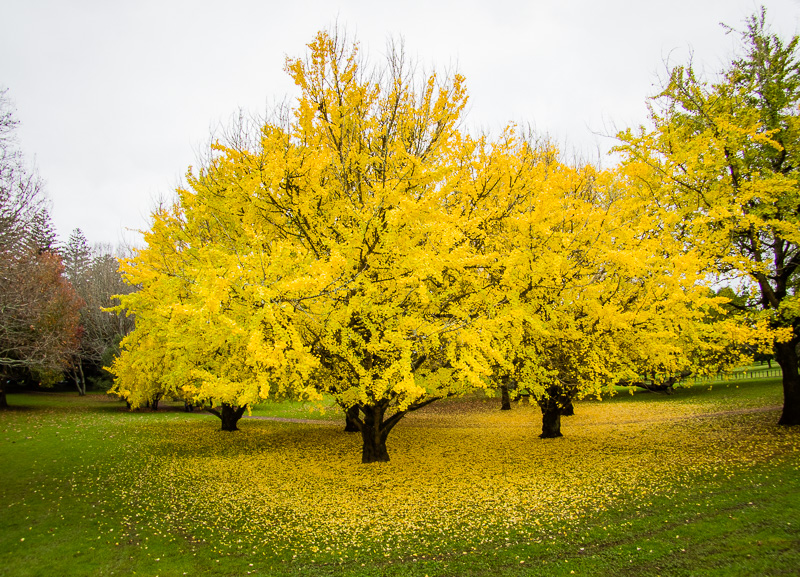
Golden ginkgo in Cornwall Park - autumn colour in early winter

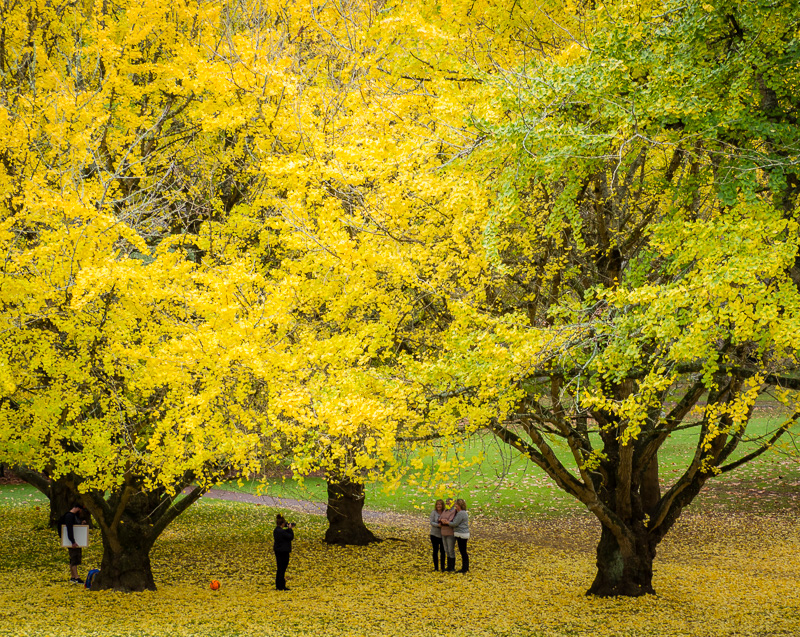
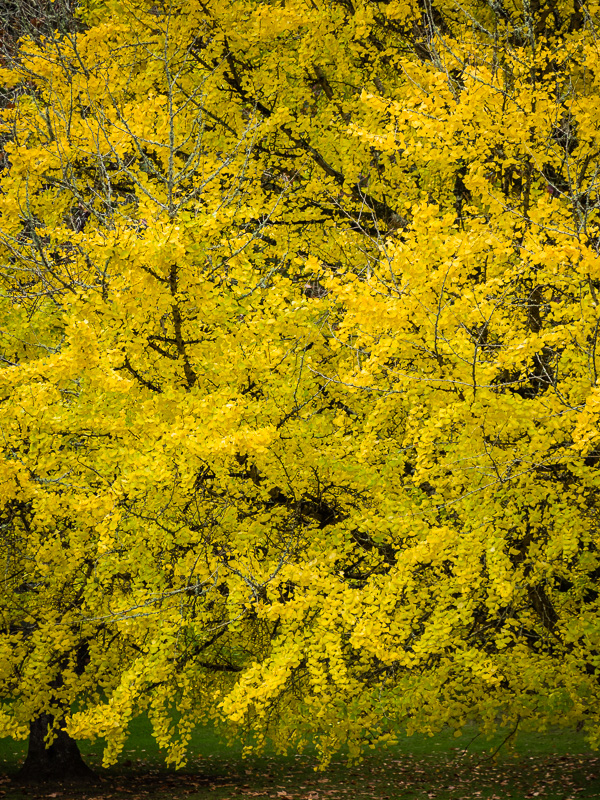
Autumn colour!  A lovely surprise on a brief visit to Auckland, where it is warmer and much less windy than Wellington.  It is considered early winter now, but the leaves were holding on.   A particularly dazzling display was in Cornwall Park - a grove of ginkgo trees planted in the 1960's.  I caught them in a moment of quiet.  People had been photographing, playing with the leaves, gazing and otherwise enjoying these wonderful trees. 

The trees look quite small in the photo above - but this was taken from a small hill beside the trees, and with a wide angle lens.  In fact, they towered over us.

While this grove is old it is certainly not ancient, but the ginkgo (Ginkgo biloba) is an ancient tree - the sole survivor of a group of trees older than the dinosaurs.  It is regarded as a "living fossil."

Young trees have a more regular shape, but these branches seemed to swirl and tangle.

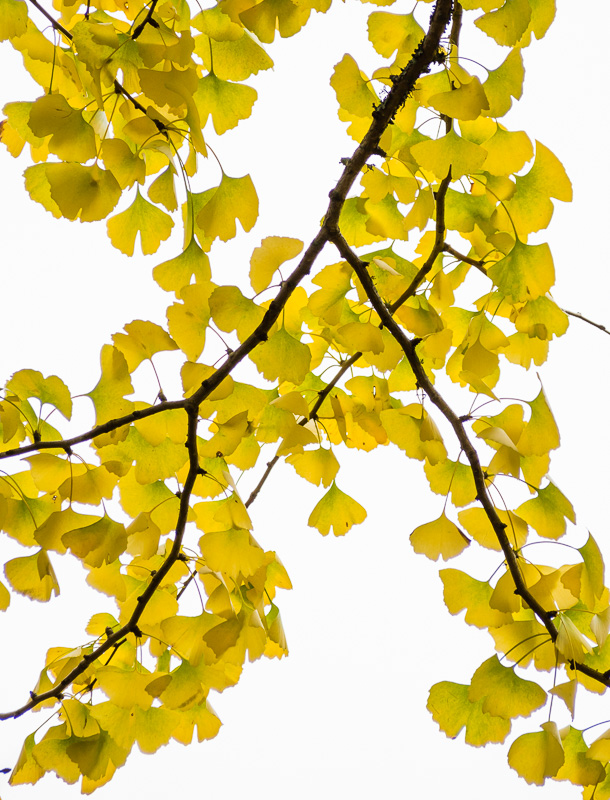
The bright green of summer leaves is gradually replaced by the bright yellow of autumn. 

Looking up you can see smudges of green remaining at the base of the fan-shaped leaves.  The similarity of the leaf shape to the maidenhair fern led to the ginkgo also being called the maidenhair tree.

It is a remarkable tree, beautiful, disease and pest resistant, very long-lived (the oldest is said to be 3,500 years old) and tolerant of quite poor conditions and pollution - here in Wellington it is a street tree in parts of the central city. 

What these trees have been through - from dinosaurs to fossil fuel-consuming monsters!

Orca excitement at Owhiro Bay

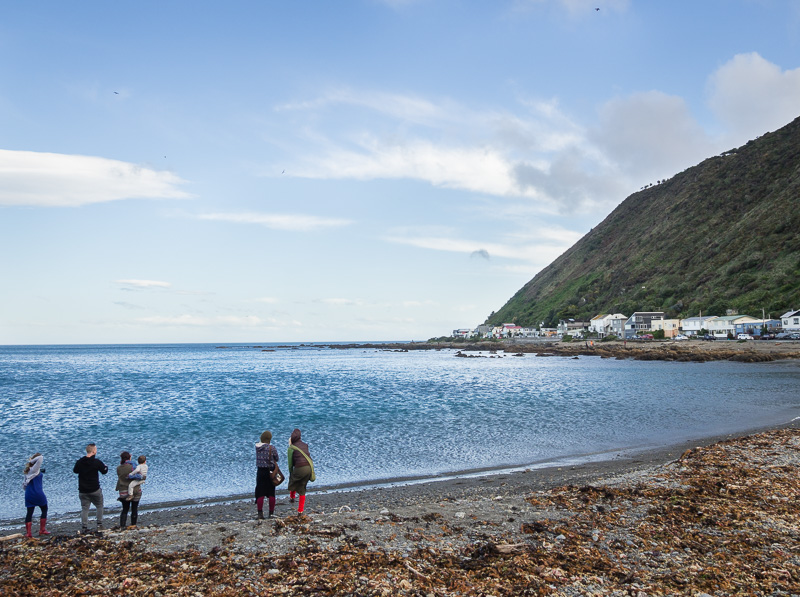
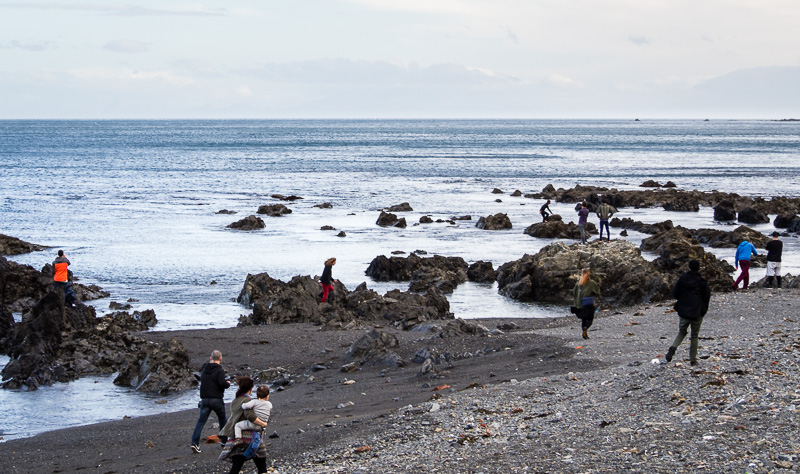
On an errand, and heading towards Owhiro Bay on Wellington's south coast, I was surprised to see people on the beach - it's winter, and the cold wind means it is not a pleasant place to linger.

As I drove closer I saw a large body swimming close to the water's edge.  The impressive dorsal fin explained the excitement.  By the time I had stopped the car there was nothing to see at the beach, but people were perched on the rocks opposite, and others were walking and running along the road, heading along the coast.

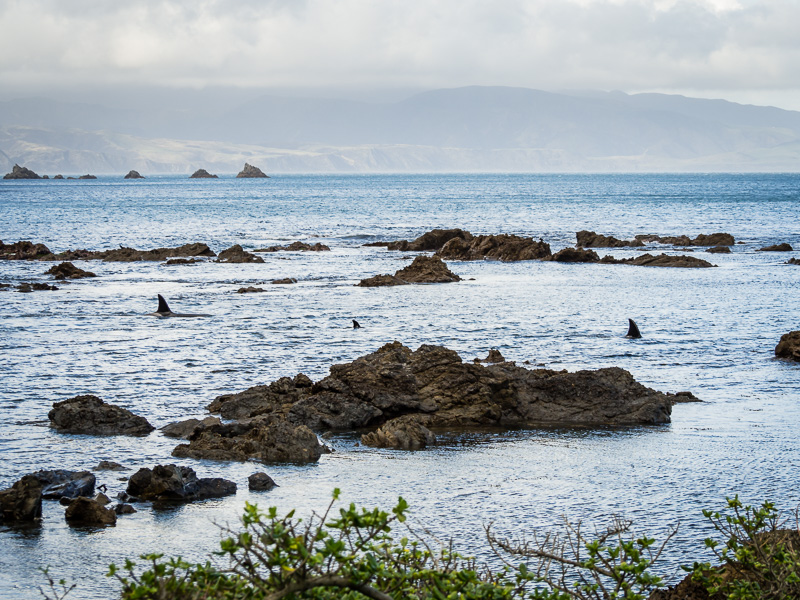
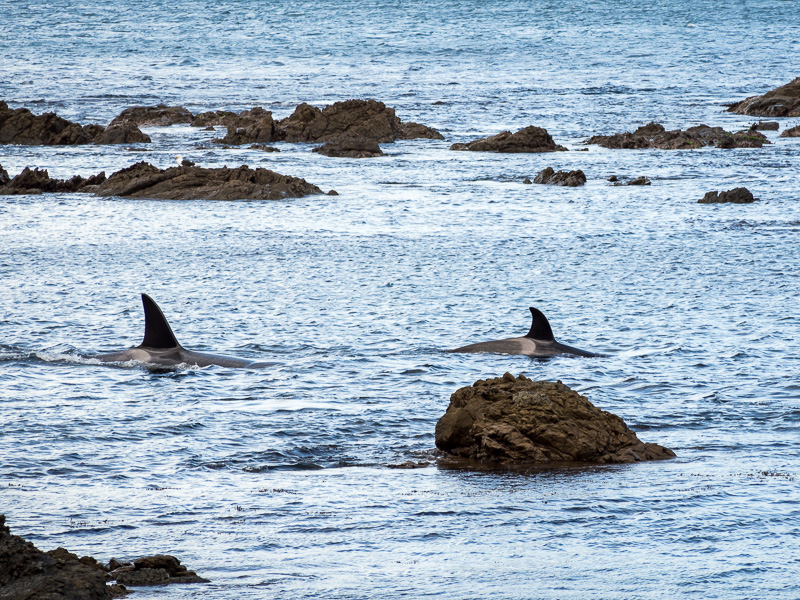
This is what the excitement was about -

Three dorsal fins - orca (killer whales) were swimming along the rocky shore.  Someone said there were five altogether - tantalisingly close but elusive.  It was really difficult to catch the moments when more of their bodies were visible.

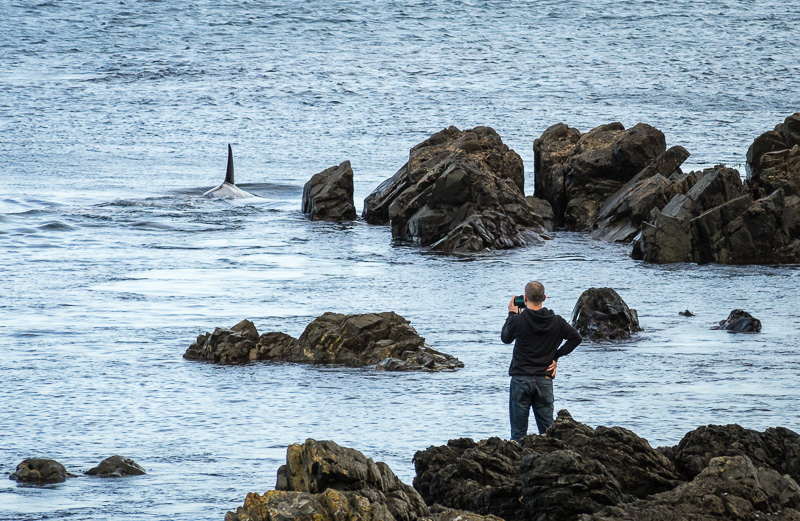
They were swimming around the rocks - so near and so far.  Their movements were so smooth, they moved so fast!  There were cameras and phones aplenty in action as people attempted to capture their sightings.

This gives some idea of scale.

These are large impressive beasts, and there was a happy buzz of excitement among the people who ran, clambered and stared, all for momentary glimpses.

Well, I didn't get any good photos, but I hope that these snaps convey some of the awe that is available to us, and that many people respond to so readily.  We are so very lucky in Wellington to be visited by orcas

World Oceans Day (8 June) has just passed, and the news we get about what is happening to the oceans is very disturbing - the water temperature is rising much more quickly than was projected, and the impact on life in the sea - these vast expanses of water that make our planet so distinct - is being profoundly affected.  Many of us are moved by the life that is threatened - excited, impressed, delighted, curious, fascinated.  I hope that these orca visits help us also to be very active in respecting and caring for the quality of the oceans and the precious marine life sustained by them.